On a warm July morning in the small city of Blue Ridge, the atmosphere around the local police precinct felt unusually busy. Officers hurried in and out of the parking lot, exchanging quick conversations, barely noticing the man who had just stepped out of an old sedan. That man—wearing a faded plaid shirt, worn jeans, and sneakers that had long seen better days—looked like a passerby with no official purpose. In reality, he was Richard Nelson, the newly appointed chief of police. He had chosen to arrive undercover, without an official announcement, hoping to observe the true culture of the department he was about to lead.
Richard believed that authentic behavior could only be seen when people did not feel the pressure of formal introductions or carefully prepared welcomes. As a leader with more than two decades of experience, he understood that real change required understanding the environment as it genuinely existed, not as people wanted it to appear. Rumors about internal issues at the precinct had circulated for months, and he had no intention of beginning his leadership blindly.
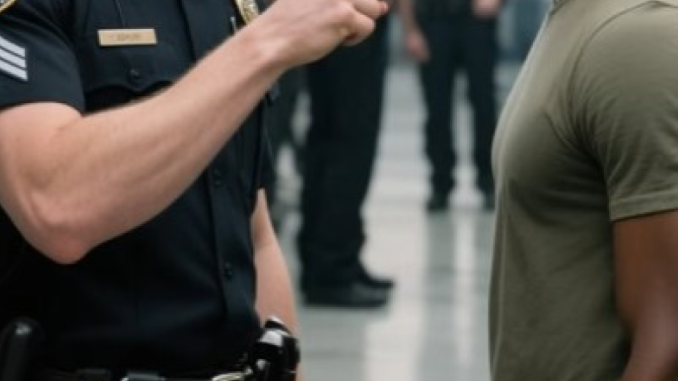
Inside the building, Richard walked quietly through the halls, watching officers review paperwork, sip coffee, and share conversations. Most did not look twice at him. But near the break room, one officer stepped forward with a confrontational tone. Officer Daniels, joined by a few colleagues who watched from the side, assumed Richard was an outsider who didn’t belong in the building. His words were dismissive, and his demeanor was discouraging. When Richard tried to respond calmly, the situation escalated. Daniels acted disrespectfully, encouraged by the laughter of those around him.
Richard remained composed despite the humiliation. He simply wiped his face, steadied his breath, and walked away without revealing who he truly was. Minutes later, an announcement echoed through the building, summoning all personnel to the briefing room for an introduction.
In the crowded room, the energy shifted from casual chatter to anticipation as Captain Harris prepared to address the team. Daniels stood confidently among his peers, believing the morning’s events had shown his authority. But when Harris announced that the new chief of police was present and would be introduced shortly, the room grew silent.
Richard stepped forward, no longer blending into the background. He placed a folder on the podium, lifted his gaze, and calmly introduced himself. The reaction was immediate—faces stiffened, conversations died, and Daniels’ earlier confidence dissolved into shock. Richard addressed the officers directly, explaining that his undercover arrival had been intentional. What he witnessed, he said, did not reflect the standards or values that the community deserved from their police department.
He spoke about professionalism, respect, and the importance of treating every person who entered the precinct with dignity. His message was clear: behavior rooted in disrespect or unfairness had no place under his leadership. He announced that Officer Daniels would be temporarily removed from duty pending an internal review. The decision was not about punishment for its own sake, but about reaffirming the importance of accountability and integrity.
In the weeks that followed, the precinct began to change. Officers grew more mindful of their conduct, communication improved, and the community slowly recognized the shift in leadership. Richard walked the halls daily, reminding everyone—through quiet example—that respect and fairness were non-negotiable principles.
His first day had revealed uncomfortable truths, but it also laid the foundation for a healthier and more responsible department. And in time, Blue Ridge would come to see the transformation that began with one leader’s calm but unwavering commitment to doing what was right.