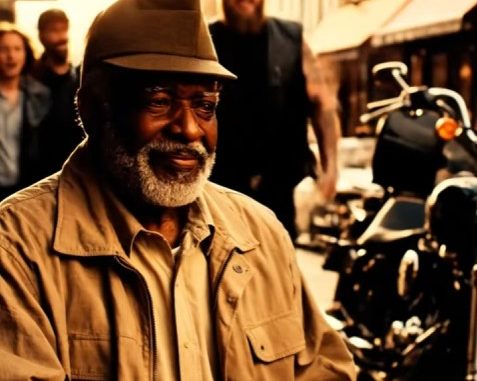
On a warm evening in a lively street café, people gathered to enjoy the golden glow of a fading sunset. Laughter, conversation, and the smell of fresh coffee filled the air as the city settled into that familiar peaceful rhythm. At a small corner table sat Mr. Samuel Hayes, a seventy-eight-year-old veteran with a gentle presence that stood out not because of noise or attention, but because of quiet strength. With his worn military cap, calm expression, and steady posture, he looked like a man who carried years of experience—and perhaps a few stories—behind his eyes.
As Samuel sipped his coffee, the tranquility was suddenly interrupted by the roar of motorcycles pulling into the street. A group of bikers parked nearby, drawing the attention of several café customers. Their leader, tall and heavily tattooed, carried the kind of confidence that often comes from being the loudest person in the room. With a smirk that signaled trouble, he spotted Samuel sitting alone and approached him with his friends close behind.
What began as teasing quickly shifted into a disrespectful confrontation. The bikers assumed the older man was an easy target for their jokes. When the leader knocked Samuel’s cup from his hand, spilling coffee across the table, gasps echoed through the café. Many expected Samuel to shout or react angrily. Instead, he simply stood up, looked the biker directly in the eyes, and remained completely composed. His calmness surprised everyone, including the bikers themselves.
Moments later, something unexpected happened. A bystander recognized the veteran and spoke quietly to the people around him. Word spread quickly through the small crowd: Mr. Hayes was not “just another man”—he was a decorated war veteran who had served his country with honor and lived through experiences far beyond what anyone there could imagine. As the truth settled into the atmosphere, the tone of the entire moment shifted.
The biker leader’s expression changed. His earlier confidence dissolved into discomfort, then regret. He stepped forward slowly, his voice softer than anyone had heard from him yet. He apologized to the veteran, admitting that he had judged him without knowing who he was, what he had been through, or how much he had done for others. His friends followed his example, each offering their own apology, acknowledging that they had acted out of ignorance and ego.
Mr. Hayes responded with the same quiet dignity he had shown from the beginning. He thanked them for apologizing and reminded them that respect is something every person deserves—no matter their age, appearance, or background. His words were gentle, wise, and free of bitterness. It was a moment of genuine understanding between people who had started the encounter on opposite sides of a tense situation.
The bikers wanted to make things right, so they insisted on paying for the veteran’s coffee and his meal. A fresh cup and a warm plate soon arrived at his table, delivered with gratitude rather than pity. As the bikers prepared to leave, they shook his hand and thanked him not only for his service, but for the lesson he had taught them through patience and dignity.
The evening ended with a sense of unity and reflection. Café customers watched as the veteran sat back down, peaceful once again. The bikers rode away quietly, changed by the moment. It was a reminder to everyone present—and now to everyone hearing the story—that respect, humility, and understanding can transform even the most unexpected encounters into powerful lessons.