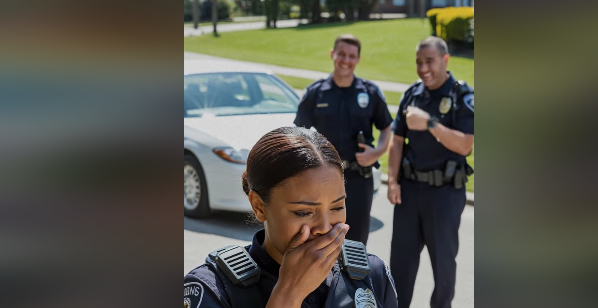
It was supposed to be an ordinary drive for General Alexandra Hayes, a highly respected senior military leader traveling between meetings on a calm weekday afternoon. Dressed in plain clothes and driving her personal vehicle, she blended into traffic like anyone else—something she appreciated on quiet days. But what happened next turned a simple commute into a lesson about patience, professionalism, and the importance of verifying facts before rushing to judgment.
As she drove through a small town, police officers initiated a traffic stop, citing concerns about a vehicle matching a description they had received. General Hayes complied immediately, pulling over, lowering her window, and greeting the officers politely.
However, when she identified herself and attempted to show official identification, the encounter took a confusing turn. The officers seemed skeptical. They questioned her repeatedly, believing her credentials were either incorrect or misrepresented. The general remained calm, offering her ID, badge, and documentation again, but the officers insisted they needed further verification.
Their doubt had nothing to do with her character—it stemmed from the rarity of encountering someone of her rank under ordinary circumstances. It was a misunderstanding that escalated faster than she anticipated.
When the officers asked her to step out of the vehicle, she complied without protest. Even when they temporarily placed her in handcuffs during their investigation, she stayed composed. Her training had prepared her for tense situations, and she understood that reacting emotionally would only complicate matters.
But after several minutes passed with no progress, General Hayes realized they were at an impasse. The officers didn’t recognize the authenticity of her credentials, and the situation was not moving forward. With professionalism and complete calm, she made a single call—to her military operations office.
Within moments, everything changed.
Her identity was confirmed at the highest level. A federal liaison contacted the local station directly, verifying that General Alexandra Hayes was not only who she claimed to be, but one of the most senior leaders within her branch. The officers received immediate instructions to release her and apologize for the confusion.
The shift in atmosphere was instant. The officers, now aware of the misunderstanding, expressed sincere regret for the inconvenience and assured her that their intent had been to follow procedure—not disrespect her position. General Hayes accepted their apology with grace.
Later that week, during a scheduled address at a leadership summit, she referenced the incident—not to criticize, but to highlight the importance of communication, verification, and empathy during high-pressure interactions. She emphasized the value of remaining calm, even when situations feel unfair, and she encouraged officers across the country to balance caution with courtesy.
What began as a case of mistaken identity ultimately became a powerful reminder for everyone involved: respect and professionalism must guide every interaction, no matter the circumstance or the rank of the person standing before you.