In an era dominated by short videos and instant reactions, certain moments cut through the noise and stay with us. These are not always the loudest or most dramatic clips, but the ones that quietly reveal something uncomfortable about human behavior. One recent viral video has done exactly that, igniting conversations across platforms about empathy, responsibility, and the idea that our actions often return to us in unexpected ways.
At its core, the video is not just about a single incident. It is about how easily dignity can be dismissed—and how quickly that dismissal can reshape lives.
A Moment That Revealed More Than Intent
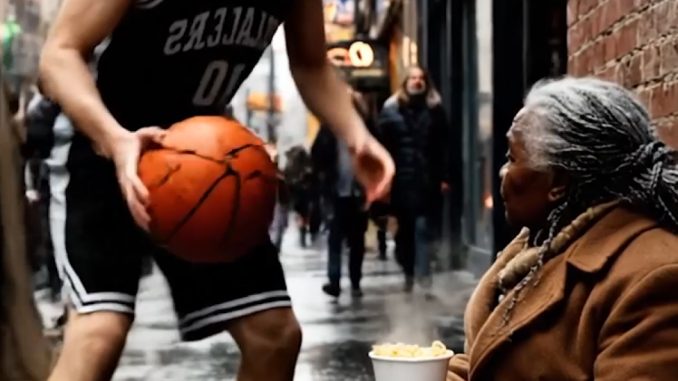
The clip opens on an ordinary city sidewalk. A woman sits near the edge of the pavement, relying on the generosity of passersby. Her presence is calm, unobtrusive, and familiar to anyone who has walked through a busy urban area. What happens next, however, exposes a troubling lack of awareness.
A young couple passes by. Instead of offering help—or simply moving on—they choose mockery. A careless action causes the woman’s food to spill, and laughter follows. The moment is brief, but its meaning is heavy. It reflects a mindset where another person’s hardship becomes entertainment rather than a call for compassion.
Psychologists often describe this behavior as emotional distancing. When people convince themselves that someone else’s struggle is unrelated to their own life, empathy fades. The video reminds us how thin that emotional line really is.
When Responsibility Enters the Scene
The tone of the story shifts when another individual appears—a well-dressed man who witnesses the interaction. He does not shout or escalate the situation, but he does something powerful: he intervenes. His presence forces the couple to pause and confront the consequences of what they just did.
This moment resonates deeply with viewers because it represents accountability. Not through aggression or humiliation, but through calm insistence that actions matter. In a world where many believe they can act without consequence, the interruption feels symbolic.
Accountability today does not always arrive through institutions or authority figures. Often, it comes through ordinary people who choose not to look away. The video captures that truth clearly.
Why These Stories Spread So Quickly
There is a reason content like this travels fast. It taps into a shared desire for fairness. When we see someone treated unjustly, we feel discomfort. When we see balance restored, we feel relief.
Some describe this reaction as satisfaction, but it is more accurately described as reassurance. It reassures us that kindness still has value, and that unkindness is not invisible. These moments reinforce a simple belief: how we treat others eventually shapes how the world treats us.
Yet the deeper lesson is not about watching someone face consequences. It is about understanding how easily we could find ourselves in any role within the story.
Dignity Is Not Determined by Circumstances
One of the most striking aspects of the video is the woman herself. Despite the disrespect she experiences, she maintains composure. She does not respond with anger or bitterness. In contrast, those who mocked her lose their sense of control the moment they are confronted.
This contrast highlights a powerful truth: dignity is not tied to wealth, appearance, or status. It is revealed through behavior. The way we treat people who offer us nothing in return says more about our character than any title or possession ever could.
Choosing Better in Everyday Moments
The takeaway from this story is not meant to inspire judgment, but reflection. Each of us encounters moments—small, fleeting moments—where we choose how to respond to others. These choices rarely feel important at the time, but they accumulate.
Living with greater awareness does not require grand gestures. It begins with simple actions:
Recognizing others instead of pretending they are invisible
Pausing before reacting, especially when humor comes at someone else’s expense
Speaking up calmly when we see unfair treatment
These choices create a ripple effect that extends far beyond a single interaction.
The Quiet Echo of Our Actions
As the video concludes, viewers are left with a lasting impression: actions leave echoes. What we give—respect, indifference, or kindness—often finds its way back to us, sometimes through others, sometimes through circumstances we never anticipated.
In a fast-moving digital world, it is easy to forget that behind every screen and every passing face is a human story. Choosing compassion is not only a moral decision; it is a practical one. It shapes the kind of world we all have to live in.
If this story reminds us of anything, it is this: kindness may feel small in the moment, but it carries the greatest return of all.