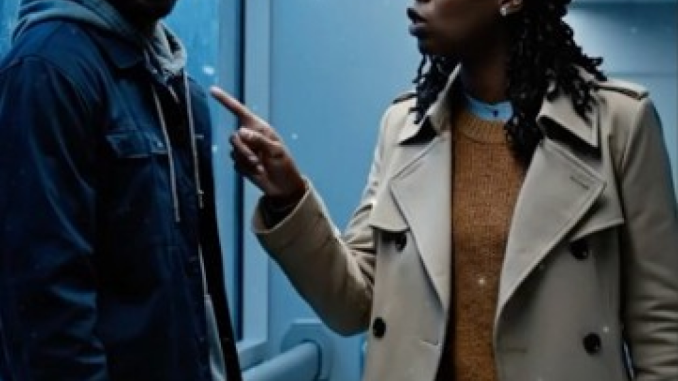
Everybody tells you to mind your own business—until business finds you.
Marcus learned that truth on a rain-soaked night in South Chicago. The streets shimmered under yellow streetlights as rain tapped steadily against his windshield. He had just finished a long double shift, his hands tight on the steering wheel, his thoughts heavier than the clouds above. Bills, responsibilities, and the pressure of holding life together filled the quiet space inside the car.
Then he saw it.
A man collapsed hard onto the sidewalk.
Cars rolled past. Headlights flashed. A few pedestrians slowed, glanced, and kept moving. The city kept breathing as if nothing had happened.
Marcus’s partner, Ayesha, turned toward him, tense.
“Marcus, don’t stop,” she said quickly. “You don’t know how that could look. Police, lawsuits, blame. We’re finally stabilizing our lives.”
Marcus slowed anyway.
His grandmother’s voice echoed in his mind, steady and unmistakable: If you’ve got strength, it isn’t just for you.
He pulled over, jumped out, and ran back through the rain. The man on the ground was bleeding and barely conscious. Marcus knelt beside him, pressing his jacket firmly against the wound. He spoke calmly, called emergency services, and stayed right there, rain soaking through his clothes, until the sirens arrived.
When the ambulance finally pulled away, Ayesha had already driven off—angry, frightened, and overwhelmed. Marcus stood alone on the sidewalk, shaking, but certain he had done the right thing.
At the hospital, the injured man opened his eyes and looked at him.
“You didn’t leave,” he whispered.
Marcus offered a small, tired smile.
“That’s how we keep each other alive.”
Life moved on—but not together. Marcus and Ayesha eventually went their separate ways. Years passed. Marcus focused on community work, night classes, and staying grounded. He didn’t talk much about that night. He didn’t expect anything from it.
Then one evening at a neighborhood barbershop, his chest tightened. The room spun. The next thing he knew, he was surrounded by hospital lights and the quiet rhythm of machines.
Ayesha rushed in, fear breaking through her usual strength. A doctor stepped out and spoke carefully.
“We need to operate immediately. It’s serious.”
Hours later, the surgeon returned.
“He’s going to make it.”
Relief crashed over Ayesha—followed by confusion.
“Why did you take him first?” she asked softly. “I heard there were other emergencies.”
The doctor paused, then removed his mask.
“Because years ago, someone took me first,” he said. “My name is Deshawn.”
Marcus looked at him, stunned.
“That night on the street,” the surgeon continued, “you saved my life. I went back to school. I became a surgeon. I never forgot.”
He smiled gently.
“When we’re given a second chance, we owe the world more than survival. We owe it service.”
Ayesha cried—not from shame, but from clarity.
Marcus lived not by accident, but by connection.
Here’s the truth: kindness is not weakness. It’s power passed forward. When we choose one another—without cameras, applause, or expectation—we build bridges that time itself will cross again.
Do good quietly.
Because one day, it might come back as your heartbeat.
Subscribe and show some love in the comments. More value and blessings are on the way.