In today’s digital age, social media feeds are filled with so-called “social experiment” videos—short clips designed to test human behavior and spark conversation. While many fade quickly, some strike a deeper chord because they reflect uncomfortable truths about society. One recent viral video has done exactly that, resonating with millions by delivering a simple but powerful message: how we treat the most vulnerable reveals who we truly are.
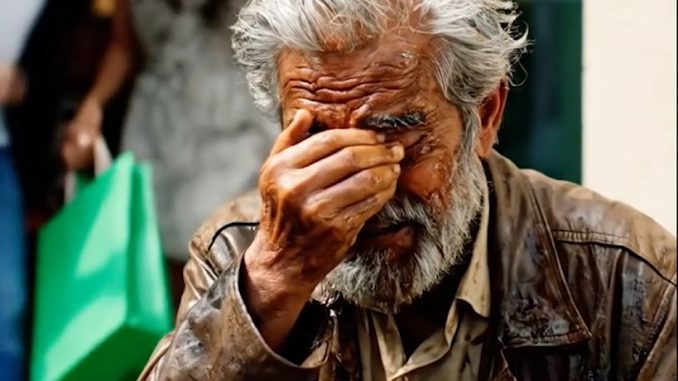
The video begins with a disturbing yet familiar scenario. An elderly man sits quietly on a public sidewalk, his clothes worn and his posture tired. He is not asking for attention. He is simply existing. Nearby, a young couple—well dressed and seemingly carefree—begin to mock him. Their laughter is loud and dismissive, and their actions are meant to entertain themselves, not considering the impact on another human being.
What makes the moment unsettling is not just the act itself, but the ease with which it happens. There is no anger, no conflict—just casual cruelty. It reflects a troubling reality: sometimes, disrespect is not fueled by rage, but by indifference.
Understanding Cruelty and Silence
Psychologists often explain such behavior through the concept of power imbalance. When someone believes they hold social, financial, or physical advantage, empathy can fade. Mockery becomes a way to feel superior, even if only temporarily. In this case, the elderly man represents someone society often overlooks—someone perceived as powerless, invisible, or unimportant.
Equally telling is the silence around the scene. No immediate intervention. No voices raised in protest. This mirrors a common pattern in real life, where bystanders hesitate, unsure whether to step in or simply look away. Silence, while passive, can still allow harm to continue.
A Shift in the Story
As the video progresses, its tone changes. A group of men enters the scene, dressed in formal attire and carrying themselves with calm authority. Their presence alone alters the atmosphere. Instead of escalating the situation with anger, the lead figure does something unexpected—he kneels beside the elderly man and gently cleans his face with a cloth.
This moment becomes the emotional core of the video. There are no harsh words, no grand speeches. Just a quiet act of dignity. It sends a powerful message: respect does not require permission, and kindness does not depend on status.
By restoring the elderly man’s dignity, the authority figure reframes the entire situation. The focus shifts away from humiliation and toward accountability—not through aggression, but through contrast.
Why the Message Connects
The video’s impact lies in its symbolism. While dramatized for storytelling purposes, the themes feel real and relatable. Viewers are drawn to stories where justice feels balanced, where empathy wins over arrogance, and where kindness is treated as strength rather than weakness.
Several key ideas stand out:
Character Is Shown in Small Moments
True values appear not in public achievements, but in how people treat those who offer nothing in return.
Power Does Not Require Cruelty
The most influential figure in the video is not loud or aggressive. His authority is expressed through restraint and compassion.
Every Person Deserves Dignity
Clothing, wealth, or social standing never determine human worth.
A Broader Reflection
The widespread sharing of this video suggests something hopeful: many people still care deeply about fairness and humanity. While online content often highlights division, moments like this remind viewers that empathy still resonates across cultures and backgrounds.
Rather than focusing solely on the dramatic ending, the real lesson lies earlier—at the point where someone chooses to see another person as human, not invisible.
In a world that moves quickly and often overlooks the quiet suffering around us, this video acts as a modern parable. It encourages viewers to pause, reflect, and consider their own actions. Whether toward an elderly neighbor, a service worker, or a stranger passing by, kindness remains one of the most powerful choices we can make.