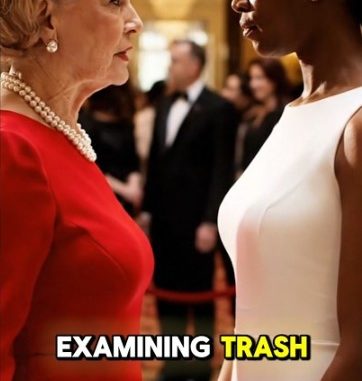
The grand ballroom of the Plaza Hotel was filled with polished shoes, soft music, and quiet confidence. It was the kind of invitation-only event where appearances mattered and reputations were assumed before introductions were made. No one expected the evening to become a lesson in how quickly misplaced judgment can undo years of carefully built influence.
Dr. Keisha Washington arrived calmly, dressed with understated elegance. Her invitation was printed, her name was listed, and her presence was entirely legitimate. Yet before she could take more than a few steps inside, the atmosphere shifted.
Victoria Whitmore, a powerful figure known for hosting exclusive gatherings, stopped the room with a raised voice. She questioned whether Dr. Washington belonged there, scrutinizing her presence instead of verifying the facts. Her son, Harrison, joined in, reinforcing the assumption that Dr. Washington must have misunderstood how such events worked.
Around them, conversations paused. Phones appeared. No one intervened, but many watched. Dr. Washington did not raise her voice or defend herself emotionally. She simply stood still, allowing the situation to unfold.
Security was called. Law enforcement arrived. Accusations of trespassing were made publicly, despite the clear evidence that Dr. Washington had been invited. What began as a social misunderstanding had now escalated into a professional and reputational risk—for everyone involved.
Then, unexpectedly, a journalist stepped forward. Michael Chen, a well-known business reporter, calmly asked a clarifying question. He referenced publicly available financial records and corporate filings. His tone was neutral, but the information he shared changed everything.
Dr. Washington was not merely a guest. She was the managing partner of Washington Capital, a major investment firm. That firm, according to regulatory disclosures, was a leading investor in Whitmore Industries—holding a larger ownership stake than Victoria herself.
The room fell silent.
Phones that had been recording now captured a different kind of moment: realization. The assumptions that had fueled the confrontation dissolved under verified facts. What was once confidence turned into visible uncertainty.
Dr. Washington finally spoke. Her voice was steady, not accusatory. She pointed out that a board member had been publicly embarrassed at her own company’s event, with cameras recording every second. She made a business decision—calmly, transparently, and within her authority.
Within days, Whitmore Industries announced leadership changes. Internal reviews were conducted. A new executive team was appointed. The company issued statements emphasizing professionalism, inclusion, and governance standards.
The incident was not about revenge. It was about accountability.
In professional environments, especially at the highest levels, respect is not optional. Titles, wealth, or familiarity do not excuse dismissive behavior. Decisions made in public spaces—especially those involving authority and exclusion—carry real consequences.
Dr. Washington did not demand attention. She did not escalate emotionally. She allowed documented truth to speak for itself.
The lesson was simple, but powerful: when people decide who “belongs” based on assumptions rather than facts, they risk far more than embarrassment. They risk credibility, trust, and everything they worked to build.
In the end, the moment was remembered not for conflict, but for clarity. And for a reminder that true authority doesn’t announce itself—it proves itself.