The lobby was quiet in the way only expensive buildings ever are—marble floors polished to a mirror shine, soft lighting, and the low hum of professionalism. It was the kind of place where confidence usually came from tailored suits and polished shoes. That morning, I had neither.
“Excuse me,” I said calmly to the front desk. “I’m here for the board meeting on the ninth floor.”
The receptionist barely looked up. Her eyes scanned my worn hoodie, my tired posture, and my shoes—scuffed from months of hospital corridors. “Sir, this is a private building,” she replied flatly. “You need to leave.”
“There must be a mistake,” I said. “I have every right to be here.”
Within moments, the tone shifted. Someone behind the desk picked up a phone. “Security, we have a situation.”
Two guards arrived quickly. One of them took hold of my arm. “Let’s go,” he said. “Out. Now.”
“Wait,” I tried to explain. “I’m a shareholder.”
The head of security laughed. “Man, look at yourself. You smell like a hospital. Your shoes have holes in them. You think we’re stupid?”
People nearby slowed down. A few stopped completely. Phones came out. Whispers spread. Someone joked that I looked like I was trying to crash a meeting that clearly wasn’t meant for me. No one spoke up. No one asked a question.
Then she appeared.
Victoria Hastings walked across the lobby in designer heels, every inch the confident executive. Three years earlier, I had personally chosen her to become CEO when I stepped down for cancer treatment. She looked at me briefly, without recognition, and said words I will never forget.
“Remove this man immediately,” she said coldly. “And if he comes back, call the police. We don’t need his kind contaminating our workspace.”
Her kind. My kind.
I had built this company from nothing. Forty percent of the shares were still in my name. And yet, standing there in that moment, I was invisible.
The crowd grew larger. The assumptions grew louder. Still, no one intervened.
No one—except one person.
“Stop.”
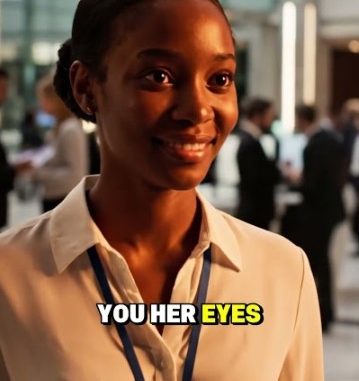
The voice was soft but steady. A young woman stepped forward, barely over five feet tall, wearing a simple intern badge. Her name read: Keisha.
“This needs to stop right now,” she said, pushing through the crowd. She looked at me, not with suspicion, but concern. “Sir, are you okay?”
“I’m fine,” I said quietly. “Thank you.”
Victoria’s expression hardened. “Stay out of this,” she snapped. “Unless you want to be unemployed by lunch.”
Keisha didn’t move. Her hand trembled, but her voice didn’t. “With respect, ma’am, this is wrong. You’re treating him like he’s nobody.”
“He is nobody,” Victoria replied.
That was when I reached into my pocket and pulled out my phone. I made one call. It took less than thirty seconds.
Then I removed an envelope from my other pocket. Inside was a single sheet of paper I had written that morning. I folded it carefully and handed it to Keisha.
“Hold onto this,” I told her. “You’re going to need it in about five minutes.”
Victoria scoffed. “What’s in that envelope? A joke?”
I smiled for the first time that day. “Something like that.”
Moments later, the truth began to surface. Faces changed. Voices fell silent. And Victoria finally realized who was standing in front of her.
This story isn’t about revenge. It’s about perspective.
It’s about how easily we confuse appearance with value, and authority with integrity. It’s about how quickly people are dismissed when they no longer look powerful. And it’s about the quiet courage of someone who chose empathy over fear.
Keisha didn’t know who I was. She didn’t stand up for me because of my title, my wealth, or my influence. She stood up because it was the right thing to do.
And that, more than anything else that happened that day, is what truly mattered.