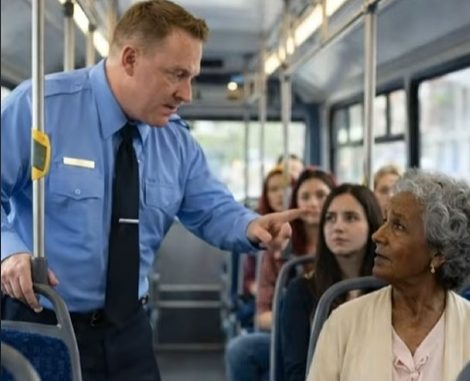
On a gray October morning, Margaret Hayes stepped onto a downtown city bus carrying nothing more than a small handbag and the quiet weight of her years. At 72, she moved slowly but with purpose, her posture shaped by decades of public service and personal loss. A heart condition made standing difficult, and like many seniors, she relied on public transportation to get where she needed to go.
As she approached the front seats—clearly marked for those who needed them most—the bus driver stopped her with a sharp command.
“Not there, ma’am. That seat’s reserved. Move back.”
Margaret paused, surprised by the tone. Calmly, she explained that she had a heart condition and needed to sit. Her voice was steady, respectful, and restrained.
The response was colder.
“Rules are rules. You’ll have to move to the back.”
The words echoed through the bus, unsettling several passengers. A few exchanged glances. Others instinctively reached for their phones, sensing that something about this moment felt wrong. Margaret tightened her grip on the rail as the bus pulled forward, forcing her to steady herself while standing.
For Margaret, this was more than discomfort. It stirred memories she thought were long buried—moments from a past she had spent her life trying to change. She had grown up hearing phrases that divided people instead of uniting them. She never imagined she would feel that same sting again, decades later, in the very city she once served.
When she quietly objected, asking only for basic human respect, the driver brushed her off, accusing her of “making a big deal out of nothing” and wanting special treatment.
Margaret did not raise her voice. She did not argue. She simply stood there, dignity intact, even as the bus lurched and her breathing grew heavier.
That was when a young man near the middle of the bus looked up more closely at her face.
“Wait,” he said loudly. “That’s Margaret Hayes.”
The bus fell silent.
Whispers spread quickly as recognition dawned. Margaret Hayes wasn’t just another passenger. She was a former mayor—someone who had served three terms, led major reforms, and dedicated her career to improving access, fairness, and public services for all residents. After losing her husband, she had chosen a quiet life, living modestly and continuing to engage with her community as an ordinary citizen.
The driver’s expression changed instantly.
Margaret finally met his eyes. There was no anger in her voice when she spoke, only resolve.
“I spent my life working to make this city fair for everyone,” she said. “That includes moments like this.”
By the end of the day, the incident had been reviewed by the transit authority. The driver was dismissed for violating conduct standards, and the city issued a formal apology. But Margaret did not focus on punishment.
Instead, she used the moment to advocate for change.
Within weeks, the city announced expanded protections for seniors on public transit and launched a new initiative providing free transit passes for elderly residents. The policy wasn’t about recognition or legacy—it was about ensuring that no one else would have to stand silently through an experience like hers.
Margaret later shared a brief statement with local media.
“Respect isn’t earned through titles or power,” she said. “It’s shown through everyday choices.”
Her story sparked conversation across the city. Some asked whether the consequences were enough. Others reflected on how easily dignity can be overlooked in routine moments. But nearly everyone agreed on one thing: kindness and fairness should never depend on who someone is—or who they used to be.
Because sometimes, the most powerful reminders of justice come not from authority, but from quiet courage in ordinary places.
What do you think—was this moment handled the right way, or should more have been done?