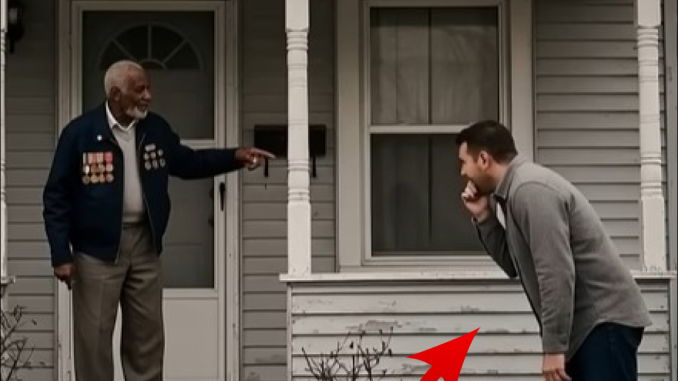
On a quiet suburban street filled with large, modern homes, one small house stood out. Its paint was peeling, the porch creaked, and the roof showed signs of age. Some people saw it as an eyesore. But for Mister James, that small house was something far more important — it was his home.
Mister James was a veteran. A quiet man who had spent years serving his country, he lived a simple life. The house held decades of memories: raising his children, sharing meals with his late wife, and finding peace after difficult chapters of life. Every worn corner told a story of love, sacrifice, and resilience.
One afternoon, that peace was interrupted.
A new neighbor, proud of his large modern home, stood outside speaking loudly. He pointed toward Mister James’ house and laughed, calling it a shack that didn’t belong on the street. A few people overheard. Some looked uncomfortable, but no one stepped in.
Mister James didn’t argue. He didn’t raise his voice. He simply looked at the neighbor, gave a small, calm smile, and walked back inside. His silence carried dignity — the kind that doesn’t need explanation.
The next day, something unexpected happened.
A black SUV slowly pulled up and parked in front of Mister James’ house. The vehicle immediately drew attention. It wasn’t loud or dramatic, but its presence changed the atmosphere. Mister James remained on his porch, calm and steady, exactly where he belonged.
An official stepped out of the SUV and approached with visible respect.
They spoke clearly and professionally: they were there to confirm Mister James’ property protection and the approval of a community restoration project. Neighbors had come together quietly, submitting a request to repair and preserve the house.
Mister James had not asked for it.
But others had decided that respect should be visible.
The neighbor who had mocked the house stood nearby, confused at first. As the situation became clear, his posture changed. The house wasn’t a problem — it was a symbol. The man living inside it wasn’t someone to dismiss, but someone whose life carried weight far beyond appearances.
Mister James stayed where he was, standing on his porch. He didn’t move toward the SUV. He didn’t need to. The moment was not about authority taking over — it was about assurance that he belonged exactly where he was.
The official confirmed it simply: the home remained his, and the community project would move forward under his approval.
The neighbor quietly admitted he had been wrong.
Mister James responded with calm honesty. Respect, he reminded him, does not come from the size of a house, but from the life lived inside it.
By the end of the day, the meaning of that small house had changed for everyone on the street. It was no longer something people overlooked. It became a reminder that dignity is not measured by appearance, wealth, or modern walls.
Sometimes, the strongest message is not spoken loudly.
Sometimes, it arrives quietly — like a black SUV that doesn’t take someone away, but ensures they remain exactly where they belong.
And sometimes, a small house holds the biggest story on the street.