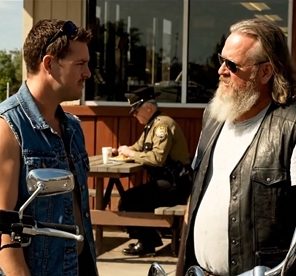
On a warm afternoon at a small roadside diner, the sound of motorcycle engines filled the air. Riders gathered outside, laughing, sharing stories, and enjoying a break from the road. Among them, at a small table near the edge of the patio, sat an elderly man eating his lunch quietly. He wore simple clothes, moved slowly, and kept to himself. To most people passing by, he looked like just another older customer enjoying a quiet meal.
Two bikers noticed him almost immediately.
From a distance, they watched the way he sat — calm, composed, alone. They exchanged a few quiet comments, not out of cruelty, but out of assumption. To them, he seemed like someone whose important days were long behind him. Someone the world had moved past.
The man, however, paid no attention. He focused on his meal, occasionally nodding politely to the waitress. There was no need for attention, no need to prove anything.
Moments later, a small incident shifted the atmosphere. The man dropped a napkin while standing to refill his coffee. He bent down slowly, picked it up, and returned to his seat with quiet dignity. One of the bikers made a passing remark about how time changes everyone.
That was when another rider nearby stepped forward.
His tone was calm but firm. He explained that the elderly man sitting alone was a retired sheriff — someone who had spent decades serving his community. He spoke about nights on dangerous roads, emergencies where quick decisions mattered, and moments when lives were saved because someone chose to act without hesitation.
The conversation stopped.
Suddenly, the quiet lunch looked different. The slow movements were no longer signs of weakness — they reflected years of experience. The silence was not emptiness — it was peace earned after responsibility.
The retired sheriff continued his lunch, unaware of the shift happening only a few meters away.
Then came the moment that changed everything.
The bikers noticed him helping the waitress carry a tray without being asked. No announcement, no display — just instinct. Service, even after retirement, remained part of who he was.
Respect replaced assumption.
One biker reached for his wallet. Another gently stopped the waitress before she returned to the table. Their request was simple: the man’s lunch was covered. Not as charity, but as recognition.
When the waitress shared the message, the retired sheriff looked surprised. He glanced toward the bikers. There were no speeches, no dramatic gestures. Just a quiet nod exchanged between people who understood something important at the same time.
Respect does not belong only to titles, uniforms, or active roles. It belongs to actions, character, and the years someone dedicates to others.
Retirement does not erase contribution. It simply changes the setting.
The moment at that diner was small, but its meaning was powerful. Assumptions are easy, especially when we only see the present version of someone. What we often do not see are the decades behind them — the responsibilities carried, the risks taken, and the people helped along the way.
The lesson was not about authority. It was about perspective.
Every person has a story that is invisible at first glance. Sometimes, all it takes is one piece of information — or one quiet action — to reveal it.
As the afternoon continued and engines started again, the atmosphere felt different. Not heavier, but more thoughtful. The bikers left with the same motorcycles, the same destination, but with a deeper understanding.
Because some things never retire.
Service. Character. And the respect they earn.