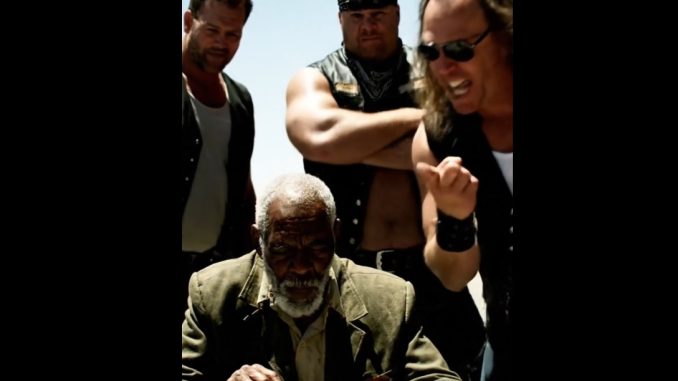
On a quiet afternoon outside a small roadside diner, a moment unfolded that would remind everyone nearby of a simple truth: respect should never depend on appearances.
An elderly Black man sat alone at an outdoor table, slowly eating his lunch. His movements were calm and deliberate. To most people passing by, he looked like someone living an ordinary day — quiet, unnoticed, and easy to overlook.
Then the noise arrived.
A group of bikers pulled in, engines rumbling, laughter loud enough to draw attention across the parking lot. Their energy filled the space instantly. What began as casual jokes between them slowly turned toward the man sitting alone.
At first, it was just comments — careless words, the kind people sometimes say without thinking. They laughed about his age, his clothes, the way he sat quietly without reacting. The man didn’t respond. He simply continued eating.
Silence, however, can be misunderstood.
The bikers moved closer. The tone shifted from jokes to direct mockery. They leaned over the table, expecting irritation, fear, or at least a reaction. But they were met with something unexpected — composure.
The elderly man finished a bite, wiped his hands, and looked up with steady eyes. His voice was calm, controlled, and without anger. It wasn’t a confrontation. It was a statement shaped by experience.
That moment slowed everything.
As one biker reached toward the man’s jacket, something changed. Small details became visible — worn fabric, carefully placed pins, medals that told a story without a single word. The laughter faded almost instantly.
Recognition replaced noise.
The group realized they were standing in front of someone whose life carried history, sacrifice, and service. The man they had dismissed as weak was, in reality, someone who had endured more than they could see in a brief glance.
What followed was not dramatic shouting or public embarrassment. Instead, it was quieter — and far more powerful.
The bikers stepped back.
Their posture shifted. Their voices lowered. One of them placed money on the table, offering to pay for the meal. Another nodded, unable to hold eye contact for long. It was not about guilt alone. It was about awareness.
The veteran did not lecture them. He did not demand an apology. He simply returned to his lunch — the same calm presence he had maintained from the beginning.
That restraint became the lesson.
Moments like this resonate online because they reflect something universal. In a fast world driven by quick judgments, people are often evaluated based on surface impressions — age, clothing, status, or silence. Yet real stories frequently sit beneath those surfaces.
The encounter outside the diner became a reminder that dignity does not announce itself loudly. Experience does not need validation. And respect should never be delayed until proof appears.
For the bikers, the shift happened in seconds. For viewers, the message lasts longer: kindness is safer than assumption, and humility often arrives after understanding.
The veteran finished his lunch the same way he began — quietly.
But the atmosphere around him was no longer the same.
Because sometimes the strongest lessons are delivered without raising a voice.