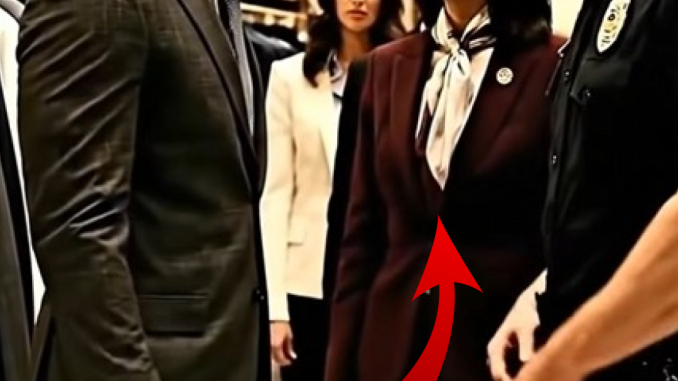
Luxury stores are often places where customers expect impeccable service and professionalism. But sometimes, a moment of misunderstanding can turn into a tense situation—especially when people jump to conclusions too quickly. One recent incident inside an upscale designer boutique became a powerful reminder of why respect and communication should always come first.
It was a busy afternoon inside the boutique. Shoppers moved between elegant displays of coats and tailored suits while soft music played in the background. Among them was a man calmly examining a designer coat. He picked it up from the rack, looking closely at the stitching and fabric, just like any other customer would.
Suddenly, the quiet atmosphere changed.
“Excuse me, sir,” a security employee said firmly as he approached. “I need to see a receipt for that coat immediately.”
The man looked surprised. “There must be some mistake,” he replied calmly. “I was just looking at this item.”
But the situation escalated quickly.
“Put that jacket down right now,” the guard insisted.
“I’m just looking at it,” the customer repeated.
The guard stepped closer, clearly suspicious. “No. You were trying to hide it.”
Nearby shoppers began turning their heads toward the scene. A second employee joined the guard, and the tension in the boutique quickly grew.
The customer attempted to stay composed. “I want to try this suit,” he said, gesturing toward another display.
One of the employees shook his head dismissively. “Sir, you must be in the wrong place.”
Then came a remark that made the situation even more uncomfortable.
“You might want to check for clothes in second-hand shops,” the employee added.
The man’s expression hardened, but he remained calm.
“You either leave,” the guard warned, “or I will have to put handcuffs on you.”
The customer took a deep breath. “You would destroy your career by doing that,” he said quietly.
The guard pointed toward the clothing rack. “We saw you holding a suit. You must be a thief.”
At that point, the man looked directly at both employees.
“I have enough money to buy this entire store,” he said.
The two employees exchanged skeptical glances.
“Who are you,” one of them asked, “that you say you’re so rich and can own this place?”
The man straightened his posture.
“I am Marcus Carter,” he said calmly. “And you have no idea who you just accused of stealing.”
The tension in the room shifted instantly.
Marcus Carter was not a shoplifter. He was the CEO of the boutique itself, the very person responsible for building the brand and investing in its success.
Looking around the room, Carter spoke firmly.
“I’m not buying here a single thing today,” he said. “And from this moment forward, both of you are expelled from this place.”
The employees’ confidence vanished.
“I am the CEO of this boutique,” Carter continued. “And I have the authority to ask both of you to leave.”
Realizing what had happened, the security employee lowered his voice.
“Look… I overreacted,” he said quietly. “I’m sorry.”
The second employee quickly followed.
“I’m sorry I got involved,” he added. “It won’t happen again.”
The incident ended with an important lesson for everyone in the store: assumptions can quickly lead to unfair treatment. Respect, patience, and asking the right questions can prevent misunderstandings before they escalate.
In the end, what began as a tense confrontation became a reminder that dignity and professionalism should always guide the way we treat others—no matter who they are.