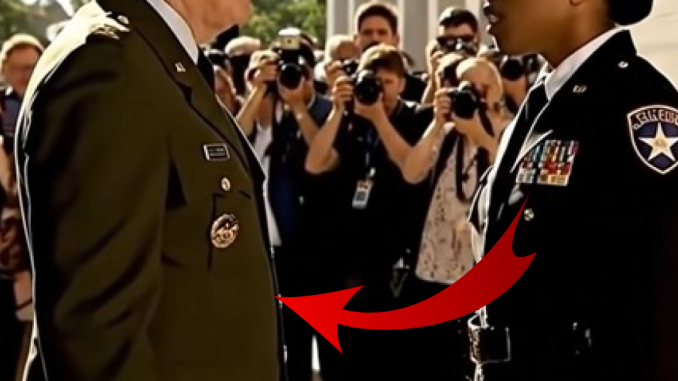
The morning of the remembrance ceremony was calm and respectful. Families gathered outside a large memorial hall, small flags moved gently in the wind, and rows of chairs inside waited for guests who had come to honor the service of military veterans.
At the entrance, security staff were carefully checking invitations and guiding people through the doors. One of the officers assigned to the main entrance was a focused and professional security guard—a Black woman responsible for ensuring that only authorized guests entered the ceremony.
Everything was running smoothly until an elderly man slowly approached the entrance.
He was a white veteran with gray hair and a quiet, steady walk. His jacket looked old but clean, and several military medals were pinned carefully on the front. The decorations reflected years of service, though from a distance they were easy to overlook.
As the man approached the doors, the security officer stepped forward and raised her hand.
“Sir, this ceremony is invitation only,” she said firmly. “I’ll need to see your credentials before you enter.”
The elderly veteran nodded politely.
“I understand,” he replied calmly. “I’m expected inside.”
The officer glanced briefly at the crowd waiting behind him and then looked back at the man.
“Without an invitation or credentials, I can’t allow entry,” she explained. “Please step aside so others can come through.”
The exchange caught the attention of a few people nearby. Some guests slowed down, curious about what was happening at the entrance.
The veteran remained calm.
“There may be a misunderstanding,” he said. “I believe I’m part of today’s program.”
The officer maintained a professional tone.
“Sir, the honorees and speakers haven’t arrived yet,” she responded. “If you’re attending, you’ll need to wait until we confirm your name.”
The man gently gestured toward the medals on his jacket.
“These are part of why I’m here,” he said quietly.
Still, the officer continued to follow procedure. Her job was to ensure the event remained organized and secure.
At that moment, a Black general who was helping oversee the ceremony approached the entrance after noticing the small crowd that had gathered.
“What seems to be the issue here?” the general asked.
The security officer turned respectfully toward him.
“Sir, this gentleman is attempting to enter without credentials,” she explained. “I was asking him to wait until we verify authorization.”
The general then turned his attention to the elderly man.
For a brief moment, he studied the veteran’s face—and suddenly his expression changed.
Recognition was immediate.
The general straightened his posture and spoke clearly.
“Officer,” he said calmly, “please allow him through.”
The security officer looked slightly confused.
“Sir?” she asked.
The general nodded toward the elderly man.
“This is the decorated veteran we are honoring today,” he said.
A quiet wave of surprise spread through the nearby guests.
Some people began applauding immediately. A few veterans in the crowd stood taller and offered respectful salutes.
The security officer’s expression softened as she realized what had happened. She stepped aside quickly and addressed the veteran with sincere respect.
“Sir, I apologize for the misunderstanding,” she said.
The elderly veteran smiled gently.
“You were doing your job,” he replied.
The general then walked beside the veteran toward the entrance of the memorial hall while applause continued from the small crowd outside.
What had begun as a routine security check turned into a powerful reminder for everyone present.
Respect, service, and sacrifice do not always announce themselves loudly. Sometimes they arrive quietly—carried by those who have spent their lives serving others.
And on that morning, a simple moment at the entrance became a lesson in dignity and honor that many guests would remember long after the ceremony ended.