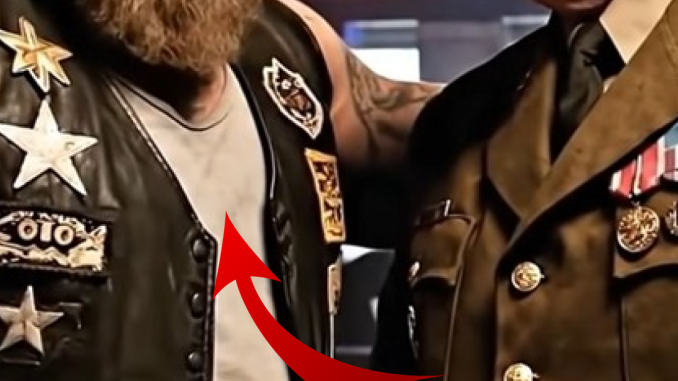
Late one evening, a small biker bar on the edge of town was packed with loud conversations, clinking glasses, and the deep rumble of motorcycles parked outside. Regulars filled the room, most of them members of the local motorcycle club who gathered there after long rides. The atmosphere was intense but familiar—until the door slowly opened.
An elderly man stepped inside.
He wore a worn military jacket and an old army cap. His gray hair and calm posture stood in sharp contrast to the loud, rough environment around him. The veteran quietly walked toward the counter, hoping to sit down and enjoy a cup of coffee.
But his presence quickly caught the attention of the bar’s leader.
The biker leader, a large man in a leather vest with patches covering his back, stood up from a nearby table and blocked the veteran’s path.
“Hey,” he said firmly. “This place is for bikers. You might want to find somewhere else.”
The room grew quiet as several bikers turned to watch.
The old veteran remained calm. “I’m just looking for a place to sit for a few minutes,” he replied respectfully.
The biker leader laughed and shook his head. “This isn’t a quiet café. You’re in the wrong place.”
A few people in the bar chuckled, and the tension in the room grew. Trying to emphasize his point, the biker leader reached out and grabbed the veteran’s old army cap.
“This hat doesn’t mean anything here,” he said.
For a moment, the room was filled with laughter. But the veteran didn’t react with anger. Instead, he simply looked at the man standing in front of him.
“You should give that back,” the veteran said calmly.
Something about his voice caused the laughter to fade.
As the biker leader looked closer at the veteran, he noticed something on the man’s arm—an old military tattoo and a unit patch sewn into the jacket sleeve. The symbol looked familiar.
Very familiar.
The biker leader leaned in, studying the patch more carefully. His confident expression slowly changed to confusion.
“Wait a second,” he said quietly.
The room became silent.
The biker leader looked directly at the veteran’s face, searching his memory. Then his eyes widened.
“Sergeant… Miller?” he asked.
The veteran nodded slightly.
“That was my rank a long time ago.”
The biker leader suddenly stepped back, stunned.
Years earlier, when he had first joined the military as a young recruit, there had been one instructor everyone remembered—Sergeant Miller. He was known for being disciplined, fair, and determined to turn inexperienced recruits into capable soldiers.
The man standing in front of him was that instructor.
Without hesitation, the biker leader handed the cap back with both hands.
“I’m sorry, Sergeant,” he said respectfully.
He turned to the rest of the bikers in the bar.
“Everyone stand up.”
One by one, the bikers rose from their chairs. The room that had once been filled with laughter now carried a quiet sense of respect.
The veteran placed his cap back on his head and gave a small nod.
Sometimes, respect arrives in unexpected places—and sometimes the people we underestimate are the very ones who once helped shape who we become.