Rain had left the sidewalk cold, gray, and shining under the weak morning light. Near the wall of an aging building, a man sat quietly on the pavement wearing a worn brown coat, faded jeans, and tired shoes that had clearly seen too many difficult days. In his hands, he held a simple cardboard sign with two words written in thick black marker: HELP ME.
People passed by without stopping. Some looked away. Others glanced at him for only a second before continuing on with their day. He did not shout. He did not follow anyone. He simply stayed there, hoping that someone might show a little mercy.
Then two police officers approached.
One of them looked down at the man and spoke sharply. He told him that he could not sit there and ordered him to move. The man answered calmly, insisting that he was not blocking anyone. But the officers did not soften. They said begging was not allowed and told him to pack his things and leave.
The man tried to explain himself. He said he had only asked for help and that asking for help was not a crime. Instead of listening, the officers escalated the encounter. Their tone grew harder. They ordered him to stand up, warning that if he did not rise on his own, they would make him stand.
At that moment, the man gave them a quiet warning. He said they were making a mistake.
Still, the officers pressed forward. When he stood, one reached for him. The man pulled back just enough to protest and told them not to touch him. Seconds later, he was ordered to turn around, place his hands behind his back, and was taken into custody. Even then, he repeated the same words: they were making a serious mistake.
Inside the vehicle, the mood stayed tense. One officer said the man should have listened earlier. But the man remained calm. He told them again that they were making a serious mistake. When one officer mockingly asked whether he thought he was important, the answer came back steady and unforgettable: important enough for you to regret this.
At the station, the officers seemed convinced they had handled the situation properly. They told him he had made everything harder than it needed to be. The man disagreed. He said they had done that themselves. When one of them challenged him again and asked if he thought he was special, the man responded with a simple request: run my full profile.
That was when the atmosphere changed.
As his record was being checked, something unexpected happened. The department dog approached the man with unusual calm and familiarity. One officer noticed it immediately and asked why the dog behaved that way around him. The man gave a quiet answer: probably because the dog knew something the rest of them did not.
Seconds later, the full explanation appeared on the screen. He was not a threat. He was not a criminal. He was a retired police officer.
The room fell silent.
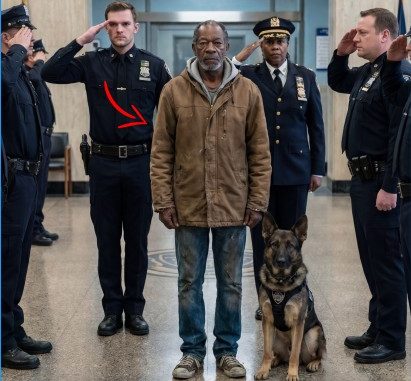
The officers, suddenly aware of what they had done, apologized. One admitted that the moment the dog reacted warmly, he realized something was wrong. Another offered to escort the man respectfully to the front entrance. The man accepted the apology with calm dignity and reminded them of a lesson they would not soon forget.
As officers lined up and stood straight, respect replaced judgment. The retired officer looked at them and delivered the final words that defined the entire moment: next time, verify before you act.
It was a powerful reminder that appearances can mislead, hardship can hide untold history, and dignity should never depend on someone’s clothes, bank account, or current situation. Sometimes the strongest lesson arrives only after a rushed judgment is exposed in full view.