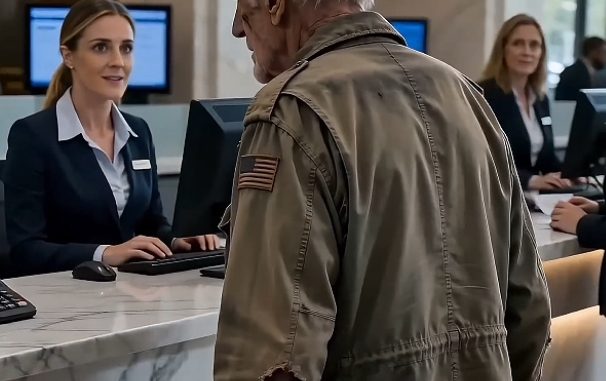
The teller stared at the screen, unable to speak.
A few seconds earlier, she had been smiling. Now her fingers trembled above the keyboard.
The old veteran stood quietly on the other side of the counter, his worn jacket still zipped halfway, his duffel bag resting beside his hand.
The branch manager rushed over.
“Sir,” the manager said, his voice suddenly careful, “I am so sorry. Please come with me.”
The teller whispered, “I didn’t know…”
The old man looked at her calmly.
“That was the problem,” he said. “You decided before you knew anything.”
The manager turned to the teller and asked for the transaction record. Then he looked at the screen again. The card did not only show wealth. It showed ownership.
The old veteran was one of the bank’s major shareholders.
The customers who had laughed now stood completely silent.
The manager escorted the veteran into the private office and personally handled his request. Inside the duffel bag were old documents, service medals, and financial papers connected to an investment he had made many years earlier.
He had not come to show off.
He had come because he was donating a large amount of money to a veterans’ housing project across the city.
When the manager heard that, his expression changed from embarrassment to respect.
“You came here to help others?” he asked.
The old man nodded.
“Many people helped me when I came home with nothing. Now it is my turn.”
Outside the office, the teller stood near her desk with tears in her eyes. She knew everyone had seen what happened. But the worst part was knowing she had judged a man who deserved respect before he even had a chance to explain himself.
After the transaction was approved, the veteran returned to the lobby.
The manager faced the staff and customers.
“What happened here today was unacceptable,” he said. “Every customer will be treated with dignity, no matter how they look, dress, or speak.”
Then he turned to the teller.
“You are suspended pending review.”
The teller lowered her head.
“I’m sorry, sir,” she said to the veteran. “I should have treated you better.”
The old man picked up his bag and paused beside her counter.
“Respect should not depend on a card,” he said softly. “It should come first.”
No one in the bank said a word.
He walked toward the exit, slower than before, but this time every person watched him differently.
Not because he was rich.
Not because he was powerful.
But because he had remained calm when others tried to embarrass him.
And by the end of that day, the bank changed its policy, the staff went through new training, and the veteran’s donation helped open housing for people who had nowhere else to go.
END.