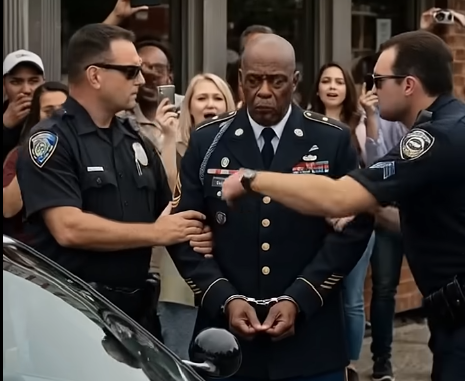
The afternoon was quiet outside a small-town diner, the kind of place where life moved slowly and most people knew each other by name. At a corner table sat an elderly man in a neatly pressed jacket, enjoying his coffee. On his chest were several medals — symbols of years of service, sacrifice, and dedication to his country.
But on this particular day, none of that was recognized.
When the man stepped outside to head back to his car, two officers pulled into the parking lot in response to a vague report about a “suspicious individual.” Without asking any questions and without attempting to verify who he was, they approached him with immediate suspicion.
Before the man could explain, the officers instructed him to turn around. Confused but calm, he complied. The sound of handcuffs clicking around his wrists echoed across the lot, drawing the attention of nearby customers. Conversations stopped. People stared in disbelief.
One woman watching from the doorway shouted, “He didn’t do anything! Why are you treating him like that?” Others began recording the scene, unsure of what was unfolding but certain something wasn’t right.
Throughout it all, the elderly man remained composed. His expression carried a quiet kind of strength, the kind that only comes from a life spent facing real danger and true hardship. And when he finally spoke, his voice was steady.
“You may want to verify who you’re arresting,” he said. “One phone call will clear this up.”
The officers brushed off his words, confident in their assumptions. They believed they were handling a routine situation — but they were wrong.
Minutes later, the calm afternoon was interrupted by the arrival of several black SUVs. Doors swung open, and a group of federal officials stepped out quickly, their faces serious. The crowd stepped back as the officials walked straight toward the detained man.
And then it happened — every official snapped to attention and saluted him.
The officers stared, stunned. This wasn’t an ordinary citizen. This wasn’t someone trying to cause trouble. This was a highly decorated veteran, a man whose service record was known and respected at the highest levels.
Radios crackled as the officers’ superiors urgently demanded updates. The weight of their mistake settled heavily on their shoulders. In front of an entire town, they had restrained a national hero without taking even a moment to check his identification.
The officers unlocked the handcuffs immediately, stumbling over apologies. The veteran simply nodded, showing no bitterness or anger. His dignity remained intact — something no wrongful detention could take away.
Within hours, an internal review was launched. By the end of the week, the officers involved were placed on leave pending further evaluation of their conduct. The incident spread through the community, then online, prompting conversations about patience, verification, and respect.
As for the veteran, he left the scene quietly. Before departing, he offered a simple line the crowd would never forget:
“Respect is shown by how we treat people — not by how we judge them.”
It was a message that lingered long after he drove away, reminding everyone that assumptions can be costly, and humility is always the stronger path.