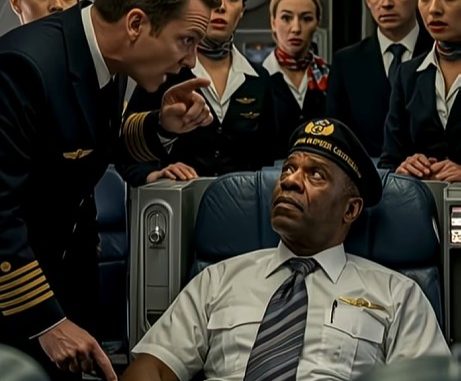
Early-morning flights usually pass quietly, with passengers settling into their seats and the crew preparing for takeoff. But on one particular flight from New York to San Francisco, a brief misunderstanding became a powerful reminder of why respect and professionalism matter—no matter who you are or what seat you’re in.
A Misread Situation
Among the first-class passengers was a reserved gentleman in his sixties, Mr. Charles Bennett. Dressed in a neatly pressed shirt and tie, he had boarded early and was calmly reviewing his itinerary in seat 2A. To those around him, he looked like someone accustomed to travel and entirely at ease.
As the captain made his way through the cabin for a final walk-through before departure, he paused beside Mr. Bennett. With a puzzled expression, he asked, “Sir, are you certain you’re in the correct seat?”
The tone wasn’t hostile—just unexpectedly firm. Still, the question drew the attention of nearby passengers. Mr. Bennett answered politely, “Yes, this is 2A. My ticket should reflect that.”
But the captain hesitated, continuing to verify the seat assignment with an intensity that felt unnecessary. A few passengers exchanged glances, sensing tension where there should have been none.
A Voice From Behind
Before the conversation could continue, a woman seated several rows back stood and approached. With calm confidence, she said to the captain, “I believe there’s something you should know.”
The captain turned, slightly confused.
“That passenger,” she continued, “is Colonel Charles Bennett—retired Air Force—and the instructor who trained many pilots in advanced navigation. His work shaped the standards we follow today.”
A ripple of surprise spread across the cabin. Mr. Bennett, who had quietly listened, simply offered a nod. The captain’s expression instantly changed as recognition set in. Colonel Bennett was indeed well-known in aviation circles, though he rarely mentioned his past accomplishments.
A Shift in Tone
The captain immediately apologized, but the senior flight attendant had already stepped in, ensuring the situation was handled with care and that Mr. Bennett felt respected and comfortable. Airline management was notified as well, emphasizing the importance of clear communication and professional conduct.
Meanwhile, Mr. Bennett remained calm throughout the entire exchange. Rather than focusing on the misunderstanding, he chose to lead by example. Later, he quietly remarked to another passenger, “Respect isn’t about rank—it’s about how we treat people, every single day.”
A Lesson Above the Clouds
By the time the plane landed, the story had spread through the passengers—each sharing their own reflection about how easily assumptions can be made and how quickly they can be corrected.
The captain later sent a written apology, expressing appreciation for Mr. Bennett’s service and acknowledging the importance of approaching every interaction with care.
In the end, what could have been an uncomfortable moment became something far more meaningful: a reminder that humility and respect can reshape any situation, even at 30,000 feet.
True professionalism isn’t shown only in flight skills—it’s shown in everyday interactions, with any passenger, in any seat.