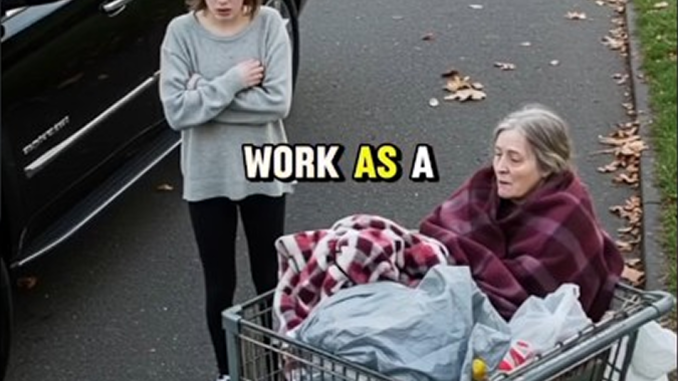
In the quiet hours before dawn, most of the city was still asleep. But in a small park, a young woman named Emily began her daily routine—a routine few ever noticed. Long before joggers or dog walkers arrived, she would push a modest metal cart and carry a broom in her hand, sweeping the park paths with meticulous care.
What made Emily’s mornings remarkable wasn’t the act of cleaning itself—it was who she carried in that cart. Inside sat her ailing mother, too sick to be left alone at home. An accident the previous year had left her mother severely weakened, and Emily, unable to afford a nurse, had taken it upon herself to care for her mother while continuing to earn a living. The park had quietly become their sanctuary, a space where Emily could work while keeping her mother safe.
One morning, Emily’s routine shifted when a man in a luxury car noticed her unusual setup. Approaching with curiosity, he asked, “Excuse me, is this cart yours?”
Emily hesitated, embarrassed, and explained her situation. Her mother’s illness had forced her to juggle two jobs—washing dishes at night and doing odd morning work—just to cover medical bills and basic living expenses. Her savings had been exhausted on surgeries and medications. She apologized if the sight disrupted the park, but her explanation revealed a deeper story of devotion and resilience.
The man listened quietly, without judgment. He reflected on Emily’s dedication and the universal truth of care: the way children are nurtured in youth often returns full circle when parents need help. “You are a devoted daughter,” he said softly. “When we are young, our mothers carry us. Later, it is our turn to carry them.”
Moved by her story, the man handed Emily a business card. Within moments, she received a notification: $5,000 had been transferred into her account. Overwhelmed, she tried to refuse, but he insisted. The money was not charity—it was meant to restore dignity, provide for her mother’s care, and secure a safe place for her to rest.
He also offered her a job, asking only that she come to his office the next day. Emily, kneeling in gratitude, was gently helped to her feet. “Don’t kneel,” he said. “Honoring your mother is already the greatest act of kindness.”
Before leaving, he requested only one thing in return: once her mother was stronger, they would have tea together.
That encounter changed Emily’s life. Her devotion, perseverance, and quiet strength had been met with compassion and opportunity. What had once been a lonely struggle in the early morning hours of the park transformed into hope, security, and a tangible reminder that kindness exists in unexpected places.
Emily learned that even in a world that often feels indifferent, compassion can arrive exactly when and where it is needed most. The dedication of one daughter had not gone unnoticed, and the smallest acts of care can inspire profound change.