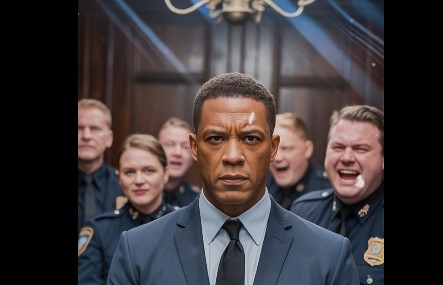
A Chicago courtroom, usually reserved for measured procedure and solemn judgments, became the setting for an unforgettable turn of events that exposed corruption at the highest levels of local law enforcement. What began as a routine trial quickly transformed into a striking lesson in accountability and integrity.
John Caldwell, a calm and poised man in his forties, stood quietly as the jury delivered a guilty verdict against him. The prosecutor, Gerald Mitchell, along with Detective Brad Whittaker and Sergeant Rick Dorsey, exchanged smug smiles. They believed they had secured a victory, celebrating among themselves the success of the case they had meticulously manipulated. To the outside observer, Caldwell seemed like just another convicted defendant — until the moment came for him to speak.
As Caldwell addressed the court, his words initially appeared to be a final plea for leniency. But as he spoke, the atmosphere shifted. He began recounting details of suspicious payments, irregular procedures, and unusual interactions within the police department — information that only someone with insider access could possibly know. At first, the courtroom erupted in laughter, mocking what they assumed was desperation. But as Caldwell continued, the laughter faded into uneasy whispers.
The judge requested evidence to support these claims. With steady composure, Caldwell responded, “You’ll see the proof shortly.”
Moments later, the courtroom doors swung open, and a team of FBI agents entered. Leading them was Agent Naomi Brooks, who began presenting federal warrants against several individuals in the room. Gasps and stunned murmurs filled the courtroom as Caldwell stood and revealed his true identity: he was the Assistant Director of the FBI, overseeing a multi-year investigation into systemic corruption in Chicago’s justice system.
The revelation sent shockwaves through the courtroom. The officers and prosecutor who had celebrated his conviction were now facing arrest. Federal charges including abuse of power, obstruction of justice, and corruption were read aloud. The very individuals who had mocked and intimidated Caldwell were led away in handcuffs, a dramatic reversal of roles witnessed by judges, reporters, and the public.
Following the intervention, Caldwell’s conviction was immediately dismissed, and he walked free. The courtroom erupted in applause as the weight of justice finally prevailed. Detective Whittaker and Sergeant Dorsey were later sentenced to lengthy prison terms, while Prosecutor Mitchell was disbarred and also sentenced. Caldwell, recognized for his dedication and patience, was promoted to regional director of the FBI, overseeing operations with renewed credibility.
In reflecting on the extraordinary case, Caldwell stated, “Even when the system falters, truth has a way of coming to light.” His words served as a reminder that integrity, diligence, and perseverance can overcome corruption — and that the pursuit of justice sometimes requires patience, strategy, and unwavering courage.
The case became a national example of accountability, demonstrating that no matter how deeply corruption is rooted, transparency and law enforcement oversight can ensure that justice is ultimately upheld.