In a world increasingly shaped by ambition, social comparison, and the constant race for material success, it has become easy to overlook one of the most essential values that holds communities together: basic human respect. A recent viral video circulating online—often shared under the simple title “Karma”—has captured global attention because it reminds viewers of a truth that transcends wealth, status, and appearance: character is revealed by how we treat people who cannot offer us anything in return.
A Small Act That Revealed a Bigger Problem
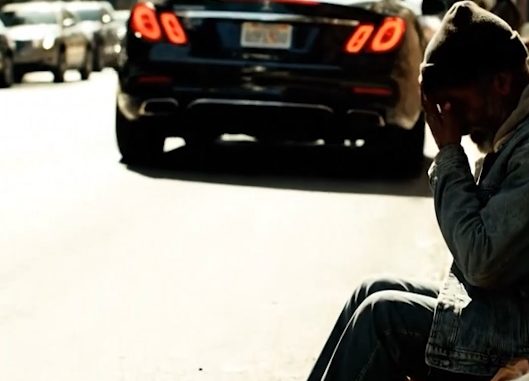
The video opens on a familiar urban scene. Traffic crawls along a busy street as a sleek, expensive convertible waits at a red light. Inside the car sits a well-dressed driver, confident and composed, clearly comfortable in his success. Nearby, on the sidewalk, an older homeless man sits quietly with his belongings gathered around him, unnoticed by most passersby.
In a brief but telling moment, the driver tosses a crumpled paper bag out of his window. The action is deliberate. Rather than simply discarding trash, the driver aims it toward the man on the curb. It is not loud or dramatic, yet it carries a powerful message of dismissal—an unspoken statement that one life matters less than another.
Moments like this often go unchallenged in real life. The driver pulls away, likely assuming the incident will fade into the background like countless other acts of casual disrespect that occur daily.
When Accountability Appears
What happens next is what has made the video resonate with millions. A group of motorcyclists, stopped nearby, witnessed the entire interaction. Instead of ignoring it, they chose to respond—not with aggression, but with calm authority.
They surround the vehicle and signal for it to stop. One biker steps forward, picks up the discarded trash, and approaches the car. He does not shout or threaten. He simply returns the bag, forcing the driver to confront the behavior he believed had no consequences.
In that moment, the dynamic shifts. The confidence displayed earlier disappears, replaced by visible discomfort. The scene becomes less about punishment and more about reflection—about realizing that actions, no matter how small, leave an impact.
Why the Story Resonates So Deeply
The widespread response to this video reveals something important about modern society. Many people feel frustration when they see unkind behavior go unaddressed. Watching someone face immediate accountability offers a sense of balance, not because of humiliation, but because fairness is restored.
More importantly, the video highlights lessons that apply far beyond a single moment:
Respect Is Not Tied to Wealth
Financial success does not define a person’s value or entitlement. True dignity comes from empathy, humility, and self-awareness.
The Role of the Bystander
The bikers symbolize the idea that change does not always come from authority figures. Sometimes, ordinary people choosing to act responsibly can make a meaningful difference.
Ego Is Fragile
The driver’s sudden shift in behavior shows how quickly arrogance fades when accountability enters the picture. Confidence rooted in status alone is rarely stable.
A Message for the Digital Age
Whether the video is a genuine incident or a staged social experiment, its message remains relevant. In an era where cameras are everywhere and moments can be shared instantly, our choices carry greater visibility—and greater responsibility.
Yet the lesson goes beyond fear of being recorded. It speaks to something deeper: every person we encounter has a story we may never know. Compassion costs nothing, but its absence can leave lasting harm.
Practical Takeaways for Everyday Life
This story invites viewers to pause and reflect on their own behavior:
Examine your assumptions about people based on appearance or circumstance
Remember that small actions—kind or unkind—create lasting ripples
Speak up when something feels wrong, even gently
Choose empathy over indifference whenever possible
In the end, the video is not truly about trash, traffic, or confrontation. It is about respect—the invisible thread that binds communities together. When that thread is ignored, society weakens. When it is protected, everyone benefits.
The simplest truth remains: kindness is always easier than regret, and respect is the quiet strength that defines who we really are.