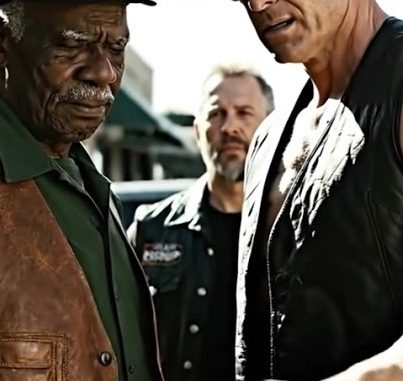
The evening had started like any other on a lively city street. Outdoor café tables lined the sidewalk, filled with people enjoying warm air, fresh coffee, and the quiet comfort that comes as the day winds down. Conversations blended with the soft hum of traffic, creating a familiar rhythm of everyday life.
At one small table sat Mr. Samuel Hayes, a seventy-eight-year-old Black veteran. He wore a simple jacket and a worn military cap, holding a cup of coffee with steady hands. There was nothing flashy about him. He wasn’t seeking attention or conversation. He simply sat, calm and composed, watching the world pass by.
The peace was interrupted when several motorcycles pulled up nearby. Their engines cut sharply through the relaxed atmosphere, drawing the attention of café patrons. A group of bikers dismounted, confident and loud, carrying themselves as if the street belonged to them. One of them noticed Mr. Hayes sitting alone and decided to approach.
With a mocking tone, the biker made a comment meant to provoke a reaction. Laughter followed from his companions. The moment grew uncomfortable, and nearby conversations fell quiet. When the biker knocked Mr. Hayes’s coffee from the table, the sound of the cup hitting the ground echoed louder than expected. Gasps spread through the café as people waited to see how the older man would respond.
Mr. Hayes stood slowly. He didn’t raise his voice or show anger. Looking directly at the man in front of him, he calmly warned that a mistake was being made. His composure was striking. While others might have reacted with frustration or fear, Mr. Hayes remained steady, as if grounded by something deeper than the moment itself.
The tension drew more attention. The bikers moved closer, their confidence still present, but less certain than before. Then, from nearby, a bystander spoke up. Quietly but firmly, he revealed what no one else had known: Mr. Hayes was a veteran.
The effect was immediate. The mood shifted. The biker who had started the confrontation stepped back, his expression changing as understanding replaced arrogance. He apologized, admitting that he had acted without knowing who Mr. Hayes was or what he had experienced in his life. Another biker followed, offering thanks for Mr. Hayes’s service.
The apology felt genuine, not forced. The earlier confidence had given way to humility. What had begun as a careless moment of judgment turned into an opportunity for reflection.
Mr. Hayes listened without interruption. When he finally spoke, his words were calm and measured. He explained that respect should never depend on a uniform, age, or appearance. Every person, he reminded them, deserves dignity simply for being human.
A server brought a fresh cup of coffee to the table. Mr. Hayes sat back down, returning to the quiet posture he had held before the interruption. The bikers left more quietly than they arrived, their earlier bravado replaced by thoughtful silence.
For those who witnessed the exchange, the moment lingered long after the street returned to normal. It was a reminder that quick judgments can miss the depth of a person’s story—and that humility and respect have the power to transform even the most tense encounters into lessons worth remembering.