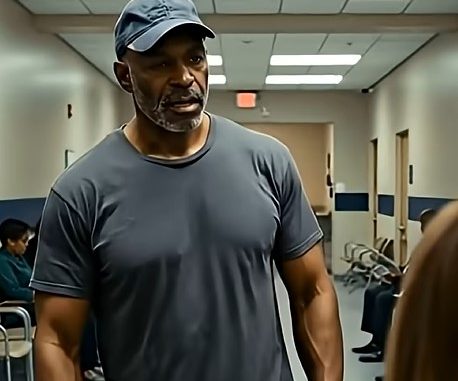
The waiting room of the VA clinic was quiet but tense. Chairs lined the walls, and the low hum of conversation faded as a man in simple clothes stepped inside. James Washington moved calmly toward the reception desk, his posture relaxed, his voice steady.
“I’m here for my checkup, please.”
The receptionist barely looked up. “We don’t serve walk-ins here. Veterans only.”
James reached into his wallet and presented his VA card. She glanced at it briefly, then laughed.
“This doesn’t look right,” she said. “Where did you get this? Is it stolen?”
Her words carried across the room. Heads turned. Phones appeared. A doctor walking by paused and shook his head.
“Sir, this clinic is for real veterans who actually served our country.”
Someone in the waiting area muttered a comment. Another whispered. Security was called. James stood still, absorbing the moment without raising his voice or defending himself.
What no one noticed was his calm.
James Washington was sixty-four years old. He wore a faded T-shirt, wrinkled khakis, worn sneakers, and an old baseball cap. No uniform. No medals. No visible proof of the life he had lived. His dark skin and simple appearance were all anyone saw.
What they didn’t see was forty years of military service.
Doctor Hartley finally stopped in front of him, arms crossed. “Sir, you need to leave. We have real veterans waiting.”
Something tightened in James’s chest. He had faced danger, led soldiers through impossible missions, and carried responsibility that never truly faded. Yet here, in a clinic meant to serve those who had sacrificed, he was being told he didn’t belong.
Then a quiet voice cut through the room.
“Doctor Hartley, please wait.”
A young nurse in blue scrubs stepped forward. Her name tag read Rachel. She picked up James’s VA card and studied it carefully. Without speaking, she typed into the computer.
Her expression changed.
“Sir,” she said gently, “there may have been a mistake. Let me verify your record.”
The doctor scoffed. “Rachel, I don’t have time for this.”
“You need to see this,” she replied, her voice respectful but firm.
Rachel turned the screen toward him. Then she looked back at James, her eyes filled with emotion.
“My father was a soldier,” she said softly. “Thank you for your patience.”
James nodded, then reached into his wallet and handed her a small folded letter.
“This is for you,” he said. “Read it when you have time.”
Rachel opened his file fully and read aloud.
“Colonel James Washington. Medal of Honor recipient. Distinguished Service Cross. Purple Heart. Forty years of active duty.”
The room went silent.
Doctor Hartley’s clipboard fell to the floor. The receptionist’s face drained of color. The phones slowly lowered.
James spoke at last.
“I didn’t come here to embarrass anyone,” he said calmly. “I came to remind us why places like this exist. Service doesn’t always wear a uniform. Respect shouldn’t depend on appearance.”
Doctor Hartley apologized publicly. The receptionist followed. Security was dismissed. Several veterans in the waiting room stood, some offering handshakes, others quiet nods of respect.
Rachel later read the letter. It wasn’t an offer of reward or power. It was a recommendation recognizing her integrity and professionalism, along with encouragement to continue advocating for dignity in patient care.
James completed his checkup that day like any other veteran.
But he left behind something far more important than his medical file — a reminder that honor is not measured by how someone looks, but by how they live and how we choose to treat them.