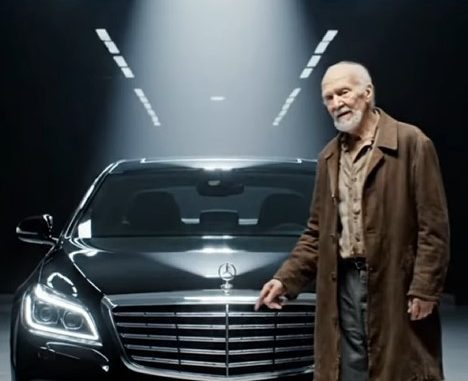
In a busy luxury car showroom filled with polished floors and shining vehicles, a young salesman named Alex stood near the entrance, waiting for the next serious buyer to arrive. Most visitors came dressed in sharp suits and confident smiles, people who already looked like they belonged among the high-priced cars. That afternoon, however, someone very different walked through the door.
An elderly man entered slowly, his shoulders slightly bent with age. His coat was worn, his shoes old and carefully patched. He moved quietly, almost hesitantly, as if unsure whether he truly belonged in a place like this. Many people barely noticed him, and those who did quickly turned their attention back to the glossy vehicles.
The man stopped in front of the most expensive car on the showroom floor. After a moment, he pointed gently and spoke in a calm voice.
“I would like that one, please.”
Alex raised an eyebrow. The price tag on the windshield read one hundred and twenty thousand dollars. With a polite but doubtful smile, he replied, “That car is very expensive, sir. Perhaps I should show you something more affordable.”
The old man nodded slightly. “I know the price,” he said. “I will pay in cash.”
Alex could not hide a quiet laugh. He assumed this was another dreamer who liked to imagine luxury without understanding what it cost. But before he could speak again, the man reached into his coat and carefully placed a folded lottery ticket on the desk.
Alex glanced at it—and froze.
The numbers matched the winning jackpot from the night before. Fifty million dollars.
For a moment, neither of them spoke. Then the man explained, gently and without pride, why the car mattered so much to him. His wife had been in hospice care for weeks. She had always dreamed of riding in a beautiful car like this one. He did not know how much time they had left together, but he wanted to give her one final memory.
Shaken by the story, Alex hurried to begin the paperwork. But just as he entered the information into the system, a warning appeared on the screen. The ticket had been reported stolen.
Alex’s hands trembled.
“It’s mine,” the man said quickly. “My neighbor took it from my mailbox. I reported it missing. I have the receipt at home. Please, I’m telling the truth.”
Alex faced an impossible decision. If he trusted the man and was wrong, he could lose his job. If he called security and was wrong, he would destroy the final wish of a dying couple.
After a long pause, fear won.
He made the call.
The police arrived. The old man was taken away, still pleading quietly, asking only for the chance to show his wife the car once. That night, Alex could not sleep. The man’s face, full of worry and hope, stayed in his thoughts.
The next morning, the dealership owner stormed into the office. The truth had come out. The neighbor had confessed. The ticket was real.
“You had an innocent man arrested,” the owner said.
Sick with guilt, Alex rushed to the hospice.
There he found the old man sitting beside his wife’s bed, holding her hand. She was weak, but still alive. Alex apologized with tears in his eyes. With help from the staff, they gently placed the woman into the passenger seat of the luxury car. As the sun began to set, the couple took a slow drive together. Her head rested on her husband’s shoulder, and a soft smile appeared on her face.
It was the memory she had always wanted.
Days later, Alex lost his job. But on his final day, a lawyer arrived with an envelope. The elderly man had claimed his winnings. His wife had passed peacefully soon after. In the folder was a transfer document and a simple note.
“See people for who they are, not what they wear.”
Inside was fifty million dollars.
Alex realized then that one act of compassion, though late, had changed his life forever. And the lesson stayed with him long after the money: respect should never depend on appearance, and kindness can matter more than any fortune.