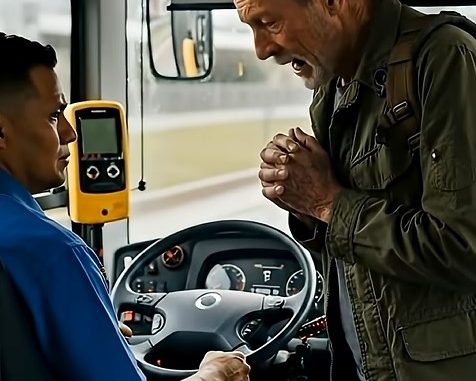
On a rainy weekday morning in Portland, a small act of kindness unfolded on a city bus, unnoticed at first by most of the world. The clock on the dashboard read 6:48 a.m. when Robert stepped onto the bus. His jacket was thin, his back was stiff with pain, and the damp air clung to his clothes. In his hand, he held an appointment card for the VA hospital and a prescription slip that mattered more than anything else he owned that day.
Quietly, almost apologetically, he spoke to the driver. He explained that he was short of the fare and needed to reach the VA by eight o’clock to receive his medication. If he missed the appointment, he would have to wait days for another chance. If he could not ride, he would try to walk the four miles in the rain, despite his injured back.
The driver, Terrell, looked at the man for a moment. He had heard many stories in his years behind the wheel, some true, some not. But this time, he noticed the worn appointment card, the tremble in Robert’s hands, and the quiet dignity in his voice. Without hesitation, Terrell told him to find a seat and waved him aboard. The bus doors closed, and the route continued as if nothing unusual had happened.
A small camera above the windshield recorded everything.
Two hours later, Terrell finished his shift and walked toward the parking lot, thinking of his three children waiting for him at home. His paycheck barely covered rent and groceries, and every hour mattered. That was when his supervisor, Karen Bennett, called him into the office.
She placed an iPad on the desk and played the footage. The screen showed Robert boarding without paying. The policy was clear. No fare meant a violation, no matter the reason. Terrell tried to explain the appointment, the medication, the veteran in the rain. The response was formal and final. Three days suspended, no pay. Six hundred dollars lost.
He signed the form, folded the letter, and walked out in silence.
What neither of them knew was that someone else had witnessed the moment on the bus. Jenny Martinez, a social worker seated in the third row, had seen the card, heard the conversation, and felt something shift inside her. She posted about it on social media that Friday morning, describing a driver who had chosen compassion and a veteran who had needed help.
By Saturday, the story had traveled far beyond the bus route. Thousands shared it. Veterans’ groups echoed it across Oregon. Local news stations followed it. The city’s transit authority found itself tagged in post after post. The headline spread quickly: a bus driver suspended for helping a veteran reach medical care.
On Sunday night, Michael Foster, director of the Portland Bureau of Transportation, opened his email to find hundreds of messages waiting. He watched the video, read the reports, and recognized the policy he himself had written the year before. It had been designed to prevent abuse, not to punish mercy.
Monday morning brought an emergency meeting. The suspension was reversed. Terrell’s lost pay was restored. More than that, a new exemption was created so veterans without means could ride free to medical appointments. Terrell was invited to help shape the policy that would protect both drivers and those in need.
Robert made it to the hospital, received his medication, and later sent a handwritten note to the transit office. It was simple, grateful, and sincere.
In the end, one quiet decision by a single father in a driver’s seat reshaped a rule, protected future riders, and reminded a city that compassion still has the power to change systems.