In a world where hospitals move quickly and every second matters, moments of humanity can sometimes be overlooked. Yet occasionally, a simple interaction becomes a powerful reminder of the respect every person deserves — especially those who have quietly sacrificed more than most.
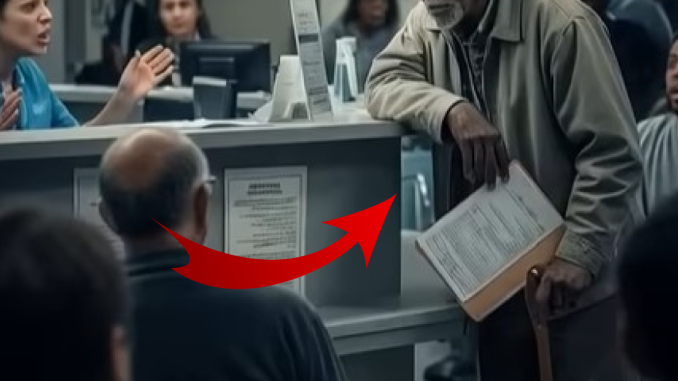
It was a busy Monday morning at Saint Mary’s Hospital. The waiting room was full. Phones rang, nurses moved quickly between desks, and patients sat patiently, each carrying their own worries. Among them was Mr. Henry Walker, a 75-year-old veteran whose life had been shaped by decades of service.
Mr. Walker stood slowly when his name was called. His movements were careful, his breathing heavy. The years had left visible marks — not just on his body, but in the quiet dignity he carried.
As he approached the reception counter, leaning gently on his cane and holding his documents, a nurse asked him to wait a little longer. Her tone was professional, not unkind, but the moment carried a weight that many in the room could feel.
Mr. Walker nodded without complaint. He had spent a lifetime waiting — waiting during long deployments, waiting through uncertainty, waiting while serving others. Sitting back down would have been easy. Speaking up was not his way.
But something unexpected happened.
A young doctor who had witnessed the exchange stepped forward. His voice was calm but firm as he addressed the situation. He reminded everyone, not with anger but with clarity, that some people carry stories we cannot immediately see.
The room grew quiet.
A woman sitting nearby stood up and offered her seat. Others looked toward Mr. Walker differently now — not out of pity, but out of recognition. Recognition that behind ordinary appearances can live extraordinary lives.
The nurse paused, then gently apologized. It was not a dramatic moment. It was human. And that made it powerful.
Mr. Walker responded with a small smile and a sentence that stayed with everyone who heard it: respect costs nothing, but it means everything.
He was then escorted inside, not as someone demanding attention, but as someone finally being seen.
Moments like this do not require conflict to matter. They do not require blame. They remind us that respect is often found in awareness — in slowing down, in listening, in recognizing the unseen journeys people carry.
Hospitals are places of urgency, but they are also places of humanity. Every waiting room holds stories: caregivers, parents, workers, veterans, people facing quiet battles. Most of those stories remain invisible.
What changed that morning was not policy or procedure. It was perspective.
The interaction left a lasting impression on everyone present. Not because something dramatic happened, but because something meaningful did: a shift from routine to recognition.
Stories like this resonate because they reflect everyday life. We all move quickly. We all assume. And sometimes we all need a reminder that dignity should never depend on appearance, age, or circumstance.
Mr. Walker’s visit became more than an appointment. It became a moment that reminded an entire room — and perhaps many beyond it — that respect is one of the simplest things we can offer, and one of the most important.