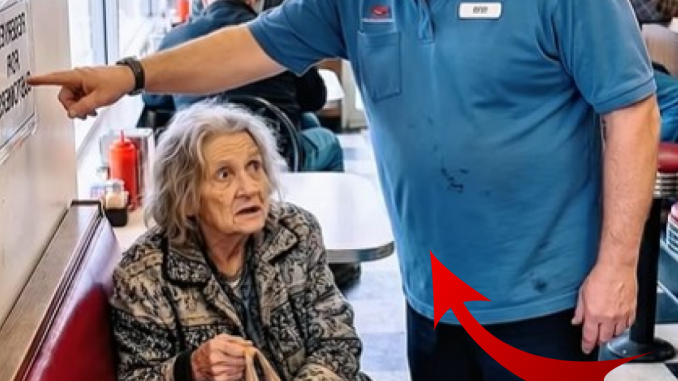
It was a typical morning inside the small neighborhood diner — the steady hum of conversation, the sound of coffee cups touching saucers, and the familiar rhythm of people beginning their day. Most customers were focused on their routines, unaware that a quiet moment unfolding near the window would soon leave a lasting impression on everyone present.
An elderly woman sat alone in a booth, holding a small grocery bag close to her chest. Her coat looked thin for the winter air, and her hands carried the subtle signs of the cold outside. She wasn’t causing any disruption. She simply needed a warm place to sit for a few minutes.
A staff member approached her and explained that the booth was reserved for paying customers. His voice was firm, guided by policy rather than emotion. The woman responded softly, explaining that her check would arrive soon and that she only needed a little time to warm up before leaving.
The moment created a quiet tension that spread through the diner. Several customers noticed. Some looked briefly, then returned to their meals. Others shifted uncomfortably but said nothing. It was one of those everyday situations where a small decision could change everything — yet no one moved.
Until someone did.
A young construction worker sitting at the counter stood up. He had been finishing his breakfast before heading to work, thinking about deadlines, responsibilities, and the long road ahead — like many people building their future step by step.
He walked over calmly and offered to pay for the woman’s meal.
The gesture was simple, but its impact was immediate. Conversations softened. The atmosphere shifted. What had felt like an uncomfortable moment became something human — something shared.
The woman’s posture relaxed slightly. Gratitude replaced worry.
Then the door opened.
An older man in a suit stepped inside and quickly recognized the woman. His concern was visible before he said a word. He moved toward her, listening quietly as he understood what had happened.
There was no raised voice. No dramatic confrontation. Just a pause — the kind that carries weight.
He then turned toward the staff member and the room, his tone calm but decisive.
The diner fell silent as he made an unexpected announcement.
He explained that he owned the property and that, effective immediately, the diner would be closing. His decision was not framed as punishment, but as a reflection — a statement about values, about the kind of place a business should be, and about what communities deserve.
The room absorbed the moment in silence.
The young construction worker’s kindness had already changed the atmosphere, but the owner’s decision transformed the story into something larger — a reminder that environments are shaped by everyday choices.
The elderly woman was no longer invisible. She was seen, respected, and protected in a way that extended beyond one meal.
Customers left the diner quietly, many carrying the same thought: moments like this reveal more about a place than any sign on the door.
Because policies matter — but people matter more.
The story spread not because of conflict, but because of contrast. One small act of kindness met one decisive act of leadership. Together, they created a message that stayed with everyone who witnessed it.
Sometimes the end of a business is not about failure. Sometimes it is about clarity.
And on that ordinary morning, inside a simple diner, a closing became a reminder that dignity should never be optional.