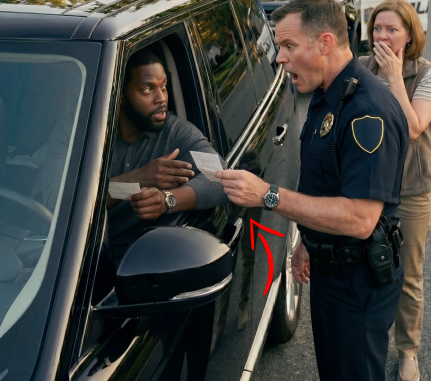
The afternoon sun reflected off the dark SUV as it slowly moved through the quiet suburban neighborhood. Children rode bicycles along the sidewalks, sprinklers watered green lawns, and neighbors chatted peacefully near their driveways.
Inside the SUV, Marcus Reed was simply heading home after a long afternoon visiting an old friend across town. The retired officer enjoyed peaceful drives through the community where he had lived for years.
But as Marcus carefully turned onto his street, one woman standing near her mailbox suddenly stepped forward and waved her hands aggressively.
“Why do you drive your SUV here like you belong?” she shouted.
Marcus slowed the vehicle and lowered his window slightly, confused by the sudden confrontation.
“Excuse me?” he asked calmly.
The woman crossed her arms and looked at him suspiciously.
“This is a peaceful neighborhood,” she continued loudly. “People around here notice strange vehicles driving slowly through the area.”
Marcus remained respectful despite the tension building around them.
“I’m just going home,” he replied. “My house is down this road.”
But the woman refused to back down.
“Why do you move around with this SUV here?” she demanded. “You don’t look familiar to me.”
Several nearby residents began quietly watching the situation from their porches. Marcus could feel the uncomfortable attention growing, but he stayed calm.
“Ma’am,” he said carefully, “I live in this neighborhood.”
The woman shook her head and immediately pulled out her phone.
“I’m calling the police,” she announced. “People have a right to feel safe.”
Marcus sighed quietly. He had spent decades serving communities across the city, and yet moments like this still happened far too often.
Within minutes, a police cruiser slowly approached the scene. The officer stepped out and looked between Marcus and the woman.
“What seems to be the issue here?” the officer asked professionally.
The woman quickly pointed toward the SUV.
“This man has been driving around suspiciously,” she said. “I’ve never seen him before.”
The officer turned toward Marcus.
“Sir, may I ask your name?”
Marcus stepped out calmly and answered without hesitation.
“My name is Marcus Reed,” he said. “I’m a retired police officer, and I live in this residence right now.”
The officer paused for a moment after hearing the name.
“Officer Reed?” he asked with surprise.
Marcus nodded.
The younger officer’s expression immediately changed.
“You trained half the department,” he said respectfully. “I recognize you now.”
The neighborhood suddenly became very quiet.
The woman who had made the call looked stunned as the officer continued speaking with obvious respect.
“This man dedicated years of his life to protecting this city,” the officer said firmly. “He absolutely belongs here.”
Marcus did not raise his voice. He simply looked at the woman calmly.
“I’ve lived here for years,” he said. “And nobody should have to prove they belong in their own neighborhood.”
The woman’s confident expression quickly disappeared. Embarrassed, she lowered her phone and stepped back toward the sidewalk.
The officer apologized to Marcus for the unnecessary situation before returning to his vehicle.
As Marcus finally drove the remaining few houses to his driveway, several neighbors who had witnessed the scene quietly waved at him with respect.
That evening, the street returned to normal. But many people in the neighborhood left with an important reminder: assumptions about others can create unnecessary division, while respect and understanding can bring communities together.
And for Marcus Reed, home was exactly where he had always belonged.