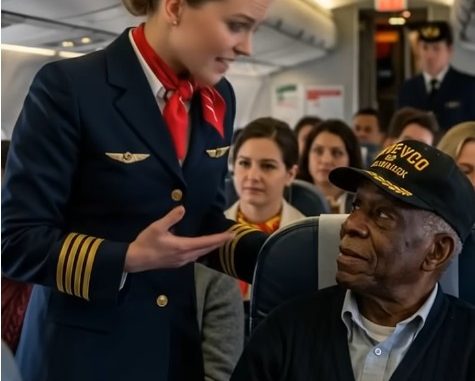
The early morning flight was boarding as usual, with passengers settling into their seats and flight attendants completing their final checks. Near the front of the cabin, an elderly traveler wearing a modest Navy veteran cap sat quietly, reviewing the safety card tucked into the seat pocket. He looked calm and content, ready for the journey ahead.
As the last group of passengers boarded, a woman approached the same row, appearing slightly flustered from the rush of travel. When she noticed the gentleman seated where she believed her ticket placed her, she politely asked for clarification. However, a moment of confusion arose when she assumed she had been assigned the seat he occupied and requested assistance from the flight crew.
A flight attendant arrived promptly, maintaining the warm professionalism expected on any airline. She took both boarding passes, checked the row number carefully, and offered a calm explanation. After a brief pause, she confirmed, “Sir is seated correctly. Your assigned seat is just a row behind.” The misunderstanding was resolved, though the atmosphere carried a hint of awkwardness as the woman moved to her correct place.
A few minutes passed, and the hum of the aircraft returned to normal. Passengers adjusted their luggage, turned off their devices, and prepared for takeoff. But then something unusual happened — something that immediately shifted the entire mood within the cabin.
The pilot stepped out from the cockpit and walked down the aisle toward the elderly traveler. His presence caused a quiet ripple through the plane; pilots rarely leave the cockpit once preparations are underway. When he stopped beside the gentleman, he paused, straightened his posture, and offered a respectful salute.
Addressing the man with a steady voice that carried through the rows, the pilot said, “Sir, I want to personally thank you for your service. We are honored to have you on board today.”
A stillness settled over the passengers before soft applause began. It grew steadily, coming from every section of the cabin. Some travelers smiled, others nodded with appreciation, recognizing the sincerity of the moment. The veteran, clearly touched but humble, responded with a gentle smile. “I appreciate that,” he said quietly. “I was simply doing my duty.”
The pilot briefly shared that the veteran had served during significant missions that contributed greatly to the safety of many. His acknowledgment wasn’t dramatic or embellished — it was a simple, heartfelt tribute to someone who had dedicated part of his life to service.
In an instant, the airplane felt different. The environment shifted from routine travel to a moment of unity and gratitude. Even those who had been absorbed in their own thoughts now watched with admiration. The woman who had earlier been uncertain about her seat also looked toward the front with a thoughtful expression.
As the pilot returned to the cockpit and the cabin settled again, passengers carried a renewed sense of respect and reflection. The moment was brief, but deeply meaningful. It served as a reminder that kindness, recognition, and gratitude can transform even the most ordinary situations.
And for the rest of that flight, the veteran rested comfortably — not because of where he was seated, but because of the sincere appreciation shown for the life he had lived in service to others.