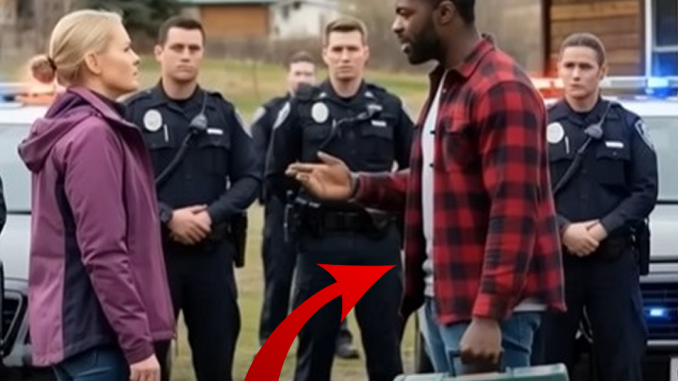
Roland Pierce spent months rebuilding his dream home. Every board, every repaired wall, and every late evening of work represented his dedication and life savings. The quiet mountain property had once been neglected, but Roland transformed it with patience and determination. For him, returning for his first peaceful night was supposed to be a moment of pride.
Instead, it became a moment of shock.
When Roland arrived, he immediately noticed something was wrong. The lights were on inside. Strange cars filled the driveway. Standing near the entrance was a woman he had never met. Roland approached calmly, holding his toolbox and important paperwork, expecting a simple misunderstanding.
But the situation escalated quickly.
The woman confronted him and confidently claimed she lived there. She told him he didn’t belong and suggested he leave the property. Roland, confused but composed, explained that he was the homeowner. He had restored the house himself, paid the taxes, and held the deed.
He even pointed out something deeply troubling — the locks had been changed without his permission.
The woman remained firm. She insisted the Homeowners Association had approved her residency and suggested Roland’s documents were not valid. What should have been a simple clarification turned into a tense dispute about ownership.
Fortunately, several police officers were already present at the scene after the disagreement had been reported.
Roland presented his paperwork — the deed, tax records, and identification. One officer stepped forward carefully, reviewing each document with attention. The atmosphere shifted from confrontation to quiet anticipation. Roland stood calmly, confident in the truth, while the woman watched, uncertainty beginning to replace her earlier certainty.
After a few moments, the officer finished examining the documents.
The verdict was clear.
The paperwork was legitimate. Roland was the rightful owner of the property.
The officer explained the situation respectfully but firmly. The woman had no legal claim to remain in the home and would need to leave the property. What began as a tense confrontation ended with clarity through verification and due process.
In that moment, the emotional tone changed again — this time toward reflection.
Realizing her mistake, the woman offered a sincere apology. She acknowledged that she had made assumptions too quickly and had judged Roland without fully understanding the situation. Her confidence earlier had been based on incomplete information, and she recognized the importance of verifying facts before reaching conclusions.
Roland’s response was calm. He hadn’t arrived to argue — he had simply come home.
The experience became more than a property dispute. It became a reminder about patience, fairness, and the risks of assumptions. Situations that appear clear at first glance can hold deeper truths, and respectful resolution often begins with listening and verification.
Roland’s story resonates because it reflects something universal: the importance of standing up for what is right while remaining composed. It also highlights how accountability and honest acknowledgment can shift conflict into understanding.
By the end of the day, the house Roland rebuilt was returned to him — not just legally, but symbolically. It represented persistence, truth, and the quiet strength of letting facts speak.
Sometimes justice is not loud. Sometimes it arrives in a simple sentence:
“He is the rightful owner.”
And sometimes, that is enough to change everything.