Airports are places defined by movement, urgency, and routine. Every day, thousands of travelers pass through security checkpoints where procedures are designed to keep everyone safe. Most interactions are quick and uneventful. But occasionally, a moment unfolds that reminds everyone watching that procedures should never replace basic human respect.
One afternoon, an elderly man quietly joined the security line at a busy airport. He carried a small worn travel bag and moved at an unhurried pace. There was nothing loud about him. He wasn’t asking for special treatment. Like everyone else, he was simply waiting his turn.
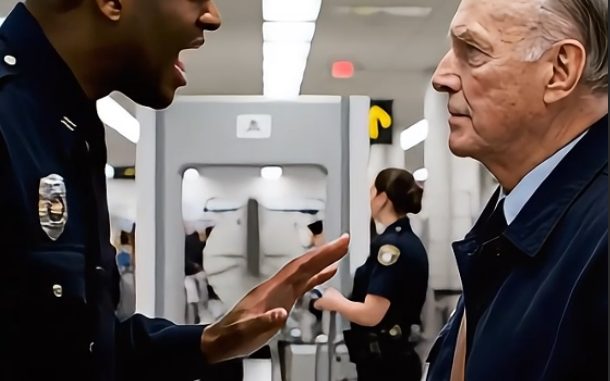
When he reached the security table, an officer stepped forward and asked him to move aside for additional screening. The request itself was not unusual — secondary checks happen every day. The tone, however, immediately changed the atmosphere.
The officer handled the man’s belongings with visible impatience. Items were removed from the bag and placed on the table with little care. Travelers nearby began to notice the tension, not because of what was being done, but how it was being done.
The elderly man remained calm. He answered questions briefly and did not raise his voice. His composure stood in quiet contrast to the increasingly dismissive attitude he faced.
During the inspection, a small case was found inside the bag. The officer opened it casually and placed it on the table. Inside were several military medals — carefully preserved, unmistakably significant.
For a moment, the dynamic shifted.
A supervisor who had been observing from nearby stepped closer. The supervisor looked at the medals, then at the officer, and calmly paused the screening. The energy in the space changed from routine procedure to recognition.
The supervisor explained that the items on the table were service medals — symbols of dedication, sacrifice, and history. What seconds earlier appeared ordinary was suddenly understood in its true context.
The officer stepped back.
There was no dramatic confrontation. No raised voices. Instead, there was realization — the kind that spreads quietly but powerfully through a room.
The supervisor moved to handle the situation directly, creating space between the man and the inspection table. The medals remained where they were for a brief moment, not as evidence, but as a reminder that every traveler carries a story that may not be visible at first glance.
The elderly man spoke only when necessary. His words were simple and measured, emphasizing something that resonated far beyond the checkpoint: procedure and respect are not separate things.
As the moment concluded, the supervisor carefully returned the medal case to the man. The gesture was small but meaningful. The officer offered a brief apology — not dramatic, but sincere.
The man accepted his belongings and prepared to continue his journey. Before walking forward, he shared a final thought that captured the lesson of the moment: respect should never be delayed.
Those nearby carried that moment with them. Not because of conflict, but because of recognition — the reminder that dignity should be the starting point in every interaction, especially in places defined by rules and urgency.
Airports run on procedure. But moments like this show that humanity is what people remember.
And sometimes, the most important shift is not in authority — but in perspective.